


In late September 2024, people in the mountains of western North Carolina went to bed believing they were hundreds of miles from the danger. Hurricanes were a coastal problem. By morning, the remnants of Hurricane Helene had dumped more than two feet of rain in places, rivers had torn through entire towns, and roads, cell service and water systems were simply gone. Some communities were cut off for days.
The 2024 season was supposed to be bad, and it was. Forecasters had warned of a well above-average year. They were right. It brought the earliest Category 5 hurricane ever recorded, Beryl, in July. Then came Helene, the deadliest hurricane to hit the mainland since Katrina. Then Milton slammed into Florida and spun off a swarm of tornadoes before it even made landfall.
Those storms taught hard lessons, and almost none of them were about the wind. They were about water, about being cut off, and about families who waited one day too long.
Lesson 1: The Water Kills More Than the Wind
You board your windows and you think you’re ready. Most people do. But storm surge on the coast and flooding inland cause most hurricane deaths. Helene proved that you don’t have to live near a beach to be in danger.
What to do:
- Know your evacuation zone and whether your home sits in a flood-prone area. Check your county’s emergency management site and FEMA’s flood maps.
- Never drive or walk into floodwater. Six inches of moving water can knock you down, and about a foot can float a car. Turn around.
- Get flood insurance if you’re anywhere near water. Standard homeowners policies don’t cover flooding, and coverage usually takes 30 days to start.
Lesson 2: When They Say Go, Go
Hurricanes give you something most disasters don’t: warning. The families who get hurt are often the ones who decide to ride out a storm they were told to leave. Don’t let your family be one of them.
What to do: if officials order an evacuation for your zone, leave early, while the roads are still open and gas stations still have fuel. Know two routes out and a place to go, whether that’s a friend’s house inland, a hotel or a shelter. Keep your gas tank at least half full all season.
Lesson 3: Plan to Be Cut Off for Two Weeks
After Helene, some mountain towns had no road access, no power, no cell service and no running water for days, and many homes went without power for weeks. FEMA’s three-day kit wasn’t close to enough.
What to do: stock for two weeks on your own:
- Water: one gallon per person per day, plus extra for pets. Fill the bathtub before the storm for flushing and washing.
- Food that needs no cooking, and a way to cook without power, used outdoors only.
- Medications: a two-week supply, plus copies of prescriptions.
- Light, batteries, a battery or hand-crank radio and power banks for phones.
- Cash in small bills. Card machines and ATMs need power.
- Important papers in a waterproof bag.
When the taps run dry for weeks, stored water runs out too. A way to pull clean water out of thin air is the kind of backup that doesn’t depend on a utility ever coming back.
Lesson 4: Harden the House Before the Storm Is Named
Plywood sells out the moment a storm gets a name. If you wait until then, you’re already too late.
What to do now, not later:
- Cut and label plywood for every window, or install storm shutters.
- Brace your garage door. It’s the weakest wall in most homes.
- Trim trees and dead branches near the house.
- Bring in or tie down everything outside the wind can throw.
- Photograph your home and belongings for insurance before the season starts.
Lesson 5: After the Storm Is When People Get Hurt
Many hurricane deaths come after the storm passes, from downed power lines, chainsaws, falls, heat, and carbon monoxide from generators run in the wrong place.
What to do:
- Stay inside until officials give the all-clear. The calm of the eye isn’t the end of the storm.
- Treat every downed line as live.
- Never run a generator indoors, in a garage, or near a window. Keep it about 20 feet from the house, with the exhaust pointed away. Carbon monoxide kills families after almost every major storm.
- Assume the tap water is unsafe until your water utility says otherwise. Boil it or treat it.
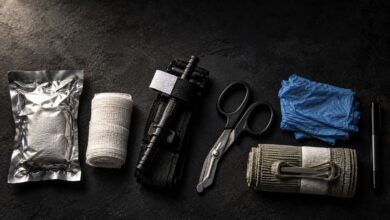
And with roads blocked and emergency crews stretched thin, a cut from a chainsaw or a fall from a roof can wait hours for help. Know what to do first when 911 is 40 minutes out, and keep a real first aid kit with a tourniquet in reach.
Lesson 6: Your Neighbors Are the First Responders
In Helene’s worst-hit towns, neighbors cleared roads with their own chainsaws, carried supplies on foot and checked on the elderly long before outside help arrived.
What to do: talk to the people on your street before the season starts. Find out who has a generator, a chainsaw, medical training or a four-wheel-drive truck, and who will need help getting out. Agree to check on each other.
Lesson 7: The Power May Be Out for Weeks
After the 2024 storms, millions of people lost power, and in the hardest-hit areas it stayed off for weeks. Your fridge and freezer become a countdown clock the moment the lights go out.
What to do:
- Keep the fridge and freezer doors shut. A closed fridge keeps food safe for about 4 hours. A full freezer holds for about 48 hours, a half-full one about 24.
- Freeze water bottles before the storm. They keep your freezer cold longer, and you can drink them as they thaw.
- When in doubt, throw it out. Meat, milk, eggs and leftovers that sat above 40°F for more than 2 hours can make you sick, and a hospital may be the last place you can get to.
- Charge everything before landfall: phones, power banks, lanterns and laptops.
If you have a generator, test it before the season, store fuel safely with stabilizer, and remember the rule from Lesson 5: outside only, about 20 feet from the house.
Lesson 8: Don’t Forget Your Pets, Your Papers and Your Medicine
When you have minutes to leave, the things you forget are the ones that hurt you later: the dog’s leash and food, a lost insurance policy, a missing week of heart medicine.
What to do:
- Pets: a carrier, leash, two weeks of food, water and vaccination records. Many shelters only take pets with proof of shots.
- Papers: IDs, insurance policies, deeds, medical records and photos of your home, in a waterproof bag, with copies saved online.
- Medicine: a two-week supply and a written list of every prescription and dose.
Keep it all in one go-bag by the door from June through November, so you can be in the car in ten minutes.
Your Hurricane Plan, on One Page
Put this on paper and stick it on the fridge:
- Your evacuation zone and two routes out.
- Where you’ll go if you leave.
- A family meeting point and an out-of-state contact.
- Your two-week supply list, checked at the start of every season.
- Your shut-off points: water, gas and the main breaker.
Then read our guide on how to stay safe during hurricane season for more detail.
The Families Who Came Through It
The people who came through 2024 best weren’t the ones with the most expensive gear. They were the ones who planned to be on their own, stocked their homes, and knew how to keep the house running when everything outside it stopped.
Hurricane season comes back every June. Between now and then, Joel Lambert’s Bug-In Guide is the fastest way to turn your house into a shelter: a stockpile that doesn’t need a refrigerator, a home that holds heat or keeps it out, and a family that knows its jobs before the wind picks up. Take a look before the first storm gets a name.
Every hurricane season, the warnings come early. The only question is whether your family uses them.



Thanks for the advice!