Browsing Category: Preparedness

  • All Post
  • Books I Recommend
  • Food
  • Preparedness
  • Shelter
  • Survival Gear
  • Survival Skills
A close-up of dirty hands holding a physical USGS 1:24,000 scale map and compass next to a dark smartphone displaying "No Signal" during a grid-down survival situation.

April 9, 2026/

Your survival currently hangs on a fragile tether of satellites managed by a government that cannot guarantee your safety and a phone that will become a useless brick the moment the grid fluctuates. You are being tracked, mapped, and funneled into “efficient” corridors that serve the state’s logistics, not your family’s evacuation. Digital maps are designed to keep you on the pavement, the most dangerous place to be during a mass exodus....

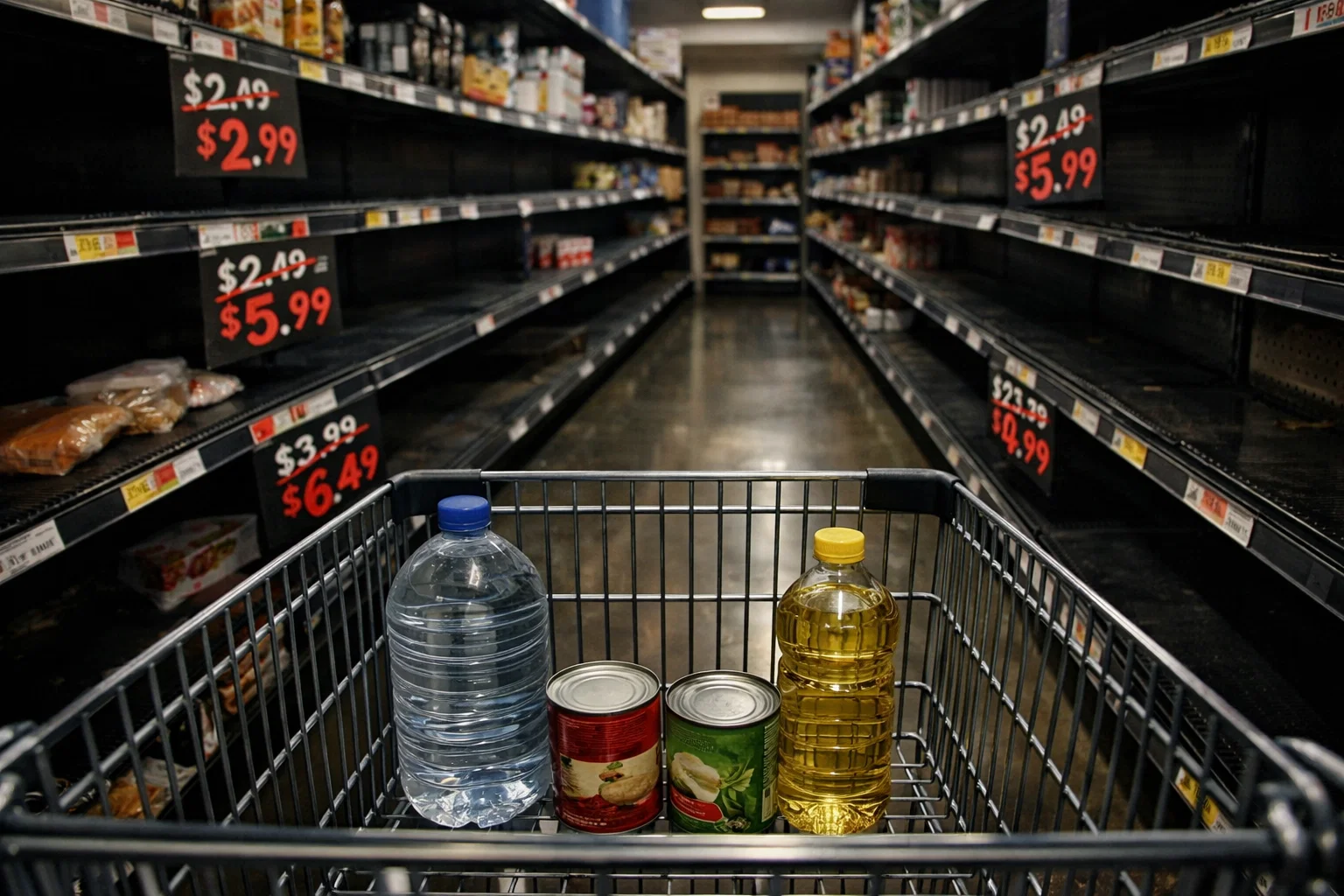
Grocery store shelves nearly empty with rising prices and survival items like water canned food and cooking oil in shopping cart

April 1, 2026/

Prices in the U.S. don’t rise slowly, they stay quiet until the system can’t absorb pressure anymore. Most people assume they’ll notice when things start getting expensive and adjust in time. But prices are not an early warning. They are the final stage of a process that has already been unfolding in the background. Retail runs on thin inventory, often just a few days of supply, and supply chains are built for efficiency, not stress. When pressure builds, it doesn’t show up...

Emergency weather radio tuned to 162.550 MHz NOAA frequency with antenna extended, alert icon active, batteries and handwritten weather band notes on table during storm

February 28, 2026/

When severe weather approaches or evacuation orders begin circulating, communication does not collapse instantly. It degrades in layers. Notifications arrive late. Maps stall mid-refresh. Calls connect, then drop. Social feeds recycle fragments. You still have signal. You just don’t have clarity. If you don’t know how to tune and use an emergency radio, you’re dependent on a layered system designed for efficiency, not overload. Emergency communication prioritizes broadcast channels before individualized data...

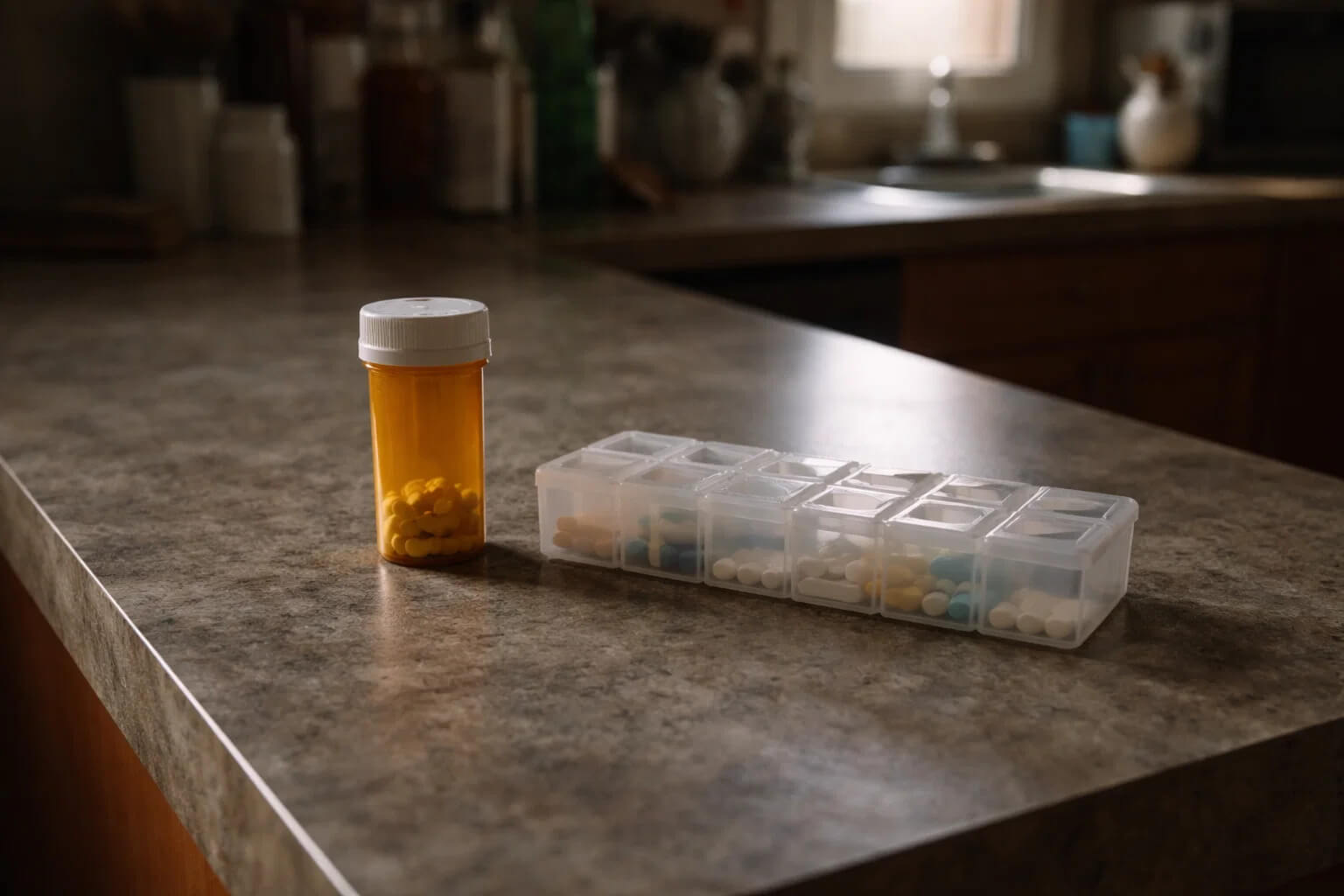
Prescription bottle and pill organizer on a kitchen counter, showing dependence on routine medication during supply chain shortages

January 25, 2026/

Health risks do not rise slowly when supply chains thin out. They surge in uneven bursts, hitting some people early while everyone else is still assuming there is time. By the time shortages are visible, the damage has already started accumulating inside ordinary routines, missed refills, delayed care, and small problems that no longer stay small. This is how health risks during supply chain shortages actually begin: quietly, selectively, and without warning.  The most...

medicinal plants to grow at home on a kitchen windowsill for survival and emergencies

January 11, 2026/

Before getting into the plants, it’s important to be clear about why this list exists. It isn’t about interesting herbs or ideal conditions. It’s about what still matters when access is delayed and replacement isn’t immediate.  Not all medicinal plants are equal in emergencies. Some take too long to mature. Others need careful processing or conditions you won’t have when stress compounds and systems slow down. When nothing else is coming, those plants don’t help.  This list focuses on medicinal plants to grow at home that hold up when modern...

Cluttered hallway with stacked boxes and storage bins blocking movement inside a home, showing how clutter can delay evacuation during a crisis.

January 3, 2026/

Crisis preparation usually focuses on what to add. More food, more gear, more supplies stacked in the corners of the house. Almost no one stops to think about what shouldn’t be there when things start breaking down.  That blind spot is dangerous. The wrong items don’t just take up space. They make your home visible when being noticed is the last thing you want. They slow you down when you need to move fast. And they create hazards that don’t exist during...

Stored gasoline and diesel fuel containers in a garage with an idle generator, illustrating fuel storage shelf life and degradation over time.

December 22, 2025/

Gasoline and diesel are commonly stored for emergencies, generators, and critical equipment. Most people assume that if it’s sealed and sitting quietly, it’s still usable. That assumption is the problem. Time changes stored fuel in ways you can’t see. The breakdown doesn’t show up on a shelf. It shows up when an engine is supposed to start and doesn’t. Shelf life matters because stored fuel only has value if it performs on...

medical supplies beyond band aids including natural remedies and wound care tools on a table

December 15, 2025/

Most people think they’re prepared because they own a first aid kit. You probably do too. It’s clean, organized, and sitting where you can reach it fast. The problem is that store-bought kits are designed to create confidence, not to handle what happens when a medical problem doesn’t end quickly.  Most of these kits fail once care lasts longer than a few hours. They’re built for minor injuries, small cuts, scrapes, quick fixes. They quietly assume pharmacies are open, doctors are available, and refills...

Organized prepper food storage on the left and messy, poorly stored supplies on the right, showing the contrast between smart prepping and common mistakes that waste money and space.

December 10, 2025/

Prepping gets expensive fast.  You buy gear you think you need, stock up on food that “should” last, and before you know it, half your budget disappears into things that don’t actually help when it matters.  Most preppers waste money and space without even realizing it. Some mistakes are small. Some pile up over time. But all of them weaken your preparedness.  Fixing these mistakes will save you money, space, and frustration.  Mistake #1: Stockpiling Foods Nobody...

Flat lay of prepper weapons including AR-15 rifle, shotgun, .22 rifle, pistol, bow, machete, and survival knives on wooden table.

November 27, 2025/

Most people imagine survival like a Hollywood movie, endless ammo, perfect accuracy, and guns that never jam. Real preppers know it doesn’t work that way. When systems fail, you don’t need the “coolest” weapon. You need the one that actually keeps you alive.  That’s why weapon choice matters. Every option has trade-offs: noise, range, ammo, weight, reliability, and how it performs under real pressure.  In this breakdown, we’re looking at the weapons preppers actually rely on. Firearms. Silent weapons. Blades. What works, what doesn’t, and when each...

Previous Page
123
Edit Template

 Privacy Policy     Terms&Conditions     Blogroll     Newsletter