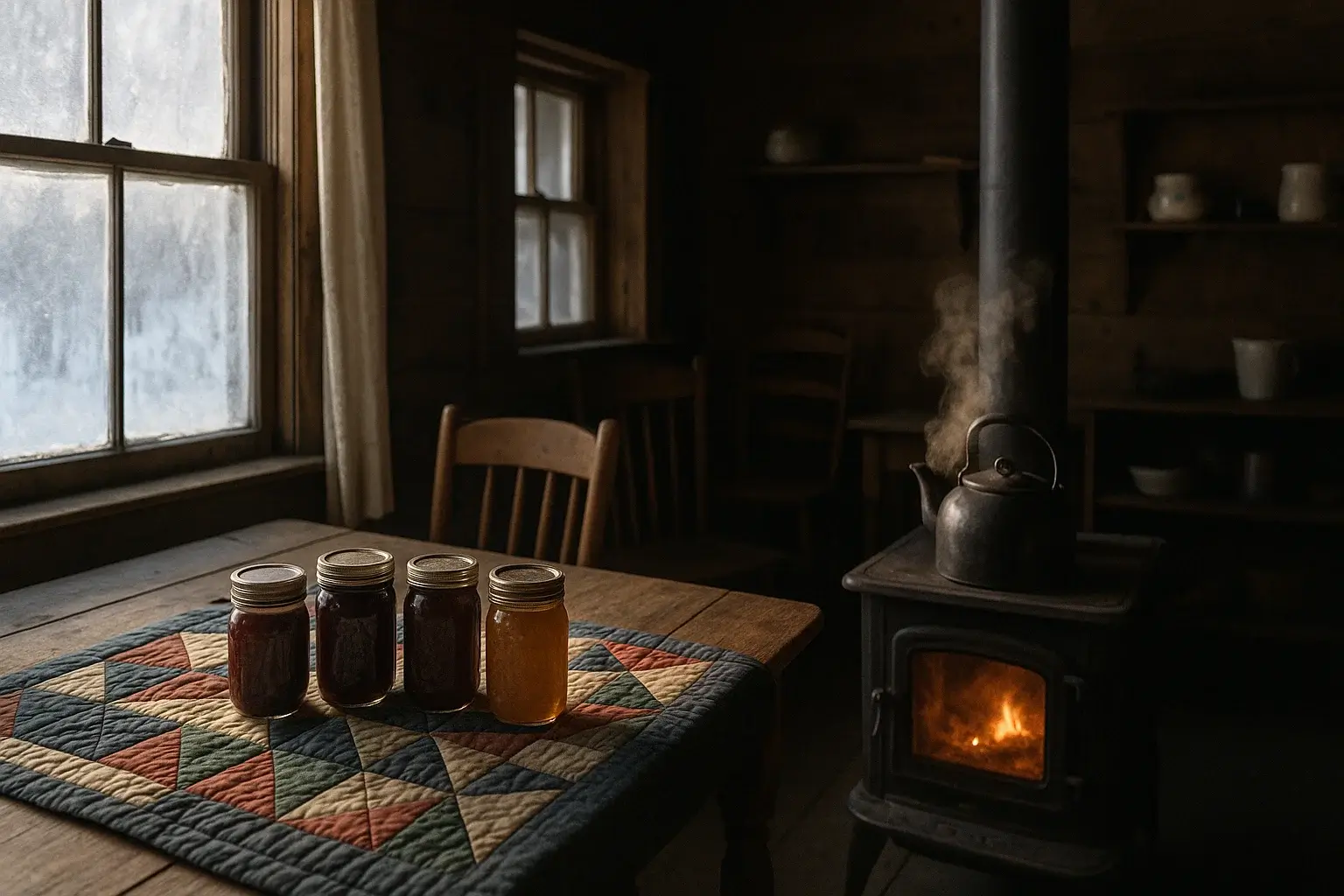
My grandmother kept a stoneware crock of honey on the back of her pantry shelf, and nobody in our family can remember it ever being empty. When sugar was rationed in 1942, she kept baking. When one of us came down with a cough in the middle of the night, she didn’t drive to a pharmacy. She reached for that crock.
Most families today have a plastic bear of honey somewhere in the kitchen and think of it as something you put in tea. They have no idea they’re sitting on one of the few foods that can outlast them, and one that doubles as medicine when the stores are empty and the pharmacy is closed.
Archaeologists have opened ancient Egyptian tombs and found pots of honey thousands of years old that were still edible. No canned good, freeze-dried meal or bucket of rice in your basement can make that claim.
Why Honey Never Goes Bad
The honey in your cupboard is about 17% water and roughly 80% sugar, which means there is almost no free water left for bacteria or mold to use. If you drop a germ into honey, the sugar pulls the moisture straight out of it. On top of that, honey is acidic, usually somewhere between a pH of 3.2 and 4.5, and the enzyme bees add to it slowly produces tiny amounts of hydrogen peroxide.
That’s the whole secret: dry, acidic and mildly antiseptic. As long as you keep water out of your jar, your honey doesn’t spoil. It just waits for you. That’s also why the rest of this article comes with one condition, and the condition is moisture. A wet spoon or a loose lid is the only real enemy honey has.
7 Ways Honey Can Save You When SHTF
1. Calories That Never Expire
A single tablespoon of honey carries about 64 calories, and a 5-pound jar holds roughly 6,800. That gives you several days of emergency energy in a container you never have to refrigerate, cook or rotate.
Chances are your stockpile is built on food that’s quietly running out of time. Rice goes rancid if it’s brown, flour gets bugs, and canned food has a date stamped on the bottom. Honey sits outside all of that, which is why the old-timers counted it among the foods you buy once and keep. If you want to know what else belongs on that short list, these 22 “forever foods” our great-grandparents relied on are where I’d start.
2. Fast Sugar for a Diabetic Emergency
If anyone in your family takes insulin or certain diabetes pills, a crash in blood sugar is one of the most dangerous things that can happen when help is far away. Shaking, sweating, confusion and slurred speech can come on fast.
The American Diabetes Association’s “15-15 rule” calls for 15 grams of fast-acting carbohydrate, then a recheck after 15 minutes, and it lists one tablespoon of honey as one of the options. Keep a small squeeze bottle in your bug-out bag, your purse or your glove box, not just in your pantry, so you have it wherever you are when it hits.
What to do: if the person can’t swallow safely or passes out, don’t put anything in their mouth. Call 911, and make sure everyone in the house knows where the glucagon kit is if a doctor has prescribed one.
3. A Cough Remedy That Actually Has Research Behind It
This is the one my grandmother used most, and science has caught up with her. A 2007 Penn State study gave children with colds a dose of buckwheat honey before bed, and their parents reported less coughing and better sleep than with no treatment at all.
The doses in that study were simple: half a teaspoon for ages 2 to 5, one teaspoon for ages 6 to 11, and two teaspoons for ages 12 to 18. If you’re an adult, you can take a spoonful straight or stir it into warm water with lemon.
For a sore throat, warm honey and lemon in hot water is still hard to beat. When cold and flu medicine is the first thing to vanish from shelves, as it did in the winter of 2022, the cough syrups our grandparents made from their own kitchens stop looking old-fashioned and start looking smart. One warning matters here, though, and I give it its own section below: none of this is for babies.
4. Dressing Minor Cuts, Scrapes and Burns
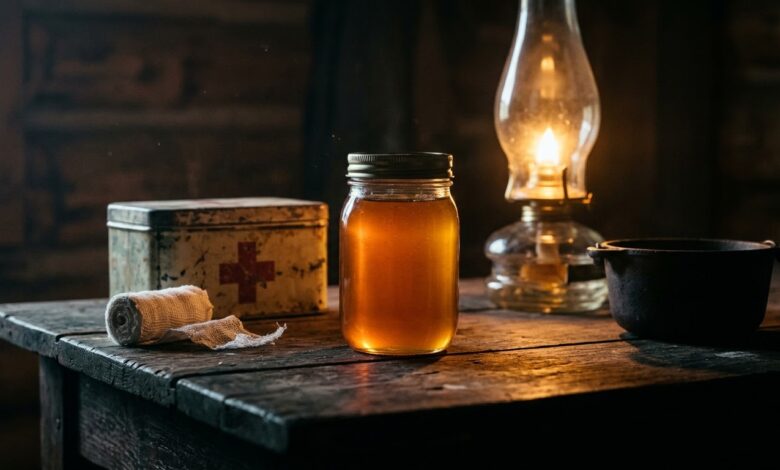
Long before antibiotic ointment, people packed wounds with honey, and modern medicine has found a place for it again. Medical-grade honey dressings were cleared by the FDA in 2007 and are used in hospitals for some wounds and burns. The same things that keep honey from spoiling, its dryness and its mild antiseptic action, make it hard for bacteria to grow in a wound.
What to do: rinse the cut with clean water first. Spread a thin layer of honey on sterile gauze, cover the wound, and change the dressing every day or whenever it gets soaked. Medical-grade honey is filtered and sterilized, so if you can, keep a tube of it in your first aid kit instead of using the jar from the kitchen.
You need to know the limits. Honey is for small, shallow wounds. Deep punctures, animal bites, burns bigger than your palm, and any wound with spreading redness, swelling, pus or fever need a doctor, not a jar. Learn the red streak that means an infection is spreading fast now, because in a long emergency, catching it a day early can be the difference that matters.
5. The Base for Herbal Syrups and Remedies
Honey is the backbone of most old home remedies because it carries herbs, tastes good enough that your kids will take it, and keeps without a fridge. The honey and lemon you already know is only the start. Elderberry syrup, ginger syrup, thyme and sage syrups for sore throats all start with a jar of honey.
Do them the right way. Elderberries must be cooked, because raw berries, leaves and stems can make you sick. Herbs can interact with prescription drugs, so if anyone in your home takes blood thinners, blood pressure pills or diabetes medicine, ask a pharmacist before giving them a remedy. Once you add water or juice to honey, it’s no longer shelf-stable, so homemade syrups go in the refrigerator and get used within a few weeks.
I don’t wing it with remedies, and you shouldn’t either. I use a book of 250 home remedies that shows how to make each one, with the amounts written down, so nobody in my house is guessing when they’re sick.
6. Something Worth Trading
During the Great Depression, families who kept bees always had something to trade, and honey was welcome at every table. In a long emergency, the same rules come back. Sugar runs out first, and anything sweet becomes valuable. If you keep a shelf of small jars instead of one big bucket, you’ll have something to barter with a neighbor without opening up your whole supply.
7. Soothing Chapped Lips and Cracked Skin
Honey pulls moisture in and holds it, which is why it shows up in so many lip balms and skin creams. In a cold, dry winter without power, your cracked hands and split lips aren’t just uncomfortable. Open cracks are a way in for infection. A thin layer of honey on chapped lips, or mixed with a little beeswax or oil for hands, does the job our grandmothers used it for.

How to Store Honey So It Lasts Forever
Your honey keeps forever only if you store it right. Follow these rules:
- Keep it sealed. Glass jars with tight metal lids are best. Food-grade plastic works if it’s kept out of the heat.
- Use a dry spoon every time. A wet or dirty spoon adds water and yeast, and that’s how honey ferments.
- Store it at room temperature, in a dark cupboard. The fridge only makes it crystallize faster.
- Don’t panic when it crystallizes. White, grainy honey is normal and still good. Set the jar in a pot of warm water, under about 110°F, and stir until it’s smooth again. Never microwave it.
- Know the real signs of spoilage. A sour or alcohol smell, foam on top, or mold means water got in. Throw it out.
- Split your supply. A few small jars mean one opened jar never puts the rest at risk.
For more ways to keep food good for decades, read our guide to unlocking the secrets of long-term food storage.
Is the Honey in Your Pantry Even Real?
Not all honey is created equal. When the European Commission tested imported honey in a 2023 investigation, almost half of the samples were suspected of being stretched with cheap sugar syrup. If your jar is syrup-cut, it has more water and less of what makes honey special, so it won’t keep the way real honey does, and it won’t do much for your cough or your cut either.
What to do: buy from a local beekeeper or a farmers market whenever you can, and pay attention to the label. Look for “100% pure honey” and a single country of origin, not a vague blend of several. Raw, local honey costs more, but it’s the honey that will still be good when you need it.
The One Warning Every Family Needs to Know
Never give honey to a baby under 12 months old. This isn’t old wives’ tale caution. Honey can carry spores of the bacteria that cause infant botulism, and a baby’s gut can’t handle them yet. The CDC warning covers every kind of honey, raw or pasteurized, including honey baked into food and honey on a pacifier.
Older children and adults handle those spores without trouble, which is why you can use everything above for anyone in your family over a year old. Make sure everyone in your house knows this rule, including grandparents and babysitters.
What Grandma Knew That We Forgot
My grandmother didn’t learn her remedies from the internet. She learned them from her mother, standing at the stove, and that’s exactly the kind of knowledge most families have lost. When the stores are empty and your pharmacy has a line around the block, you won’t have time to search for a recipe on your phone, and your phone may not even work.
A copy of The Forgotten Home Apothecary sits next to my honey crock. Nicole Apelian put together 250 home remedies made from things you can grow, forage or already have in your kitchen. They include honey-based syrups, the honey and cinnamon mixes our grandparents swore by, and the elderberry gummies my grandkids actually ask for.
Every remedy comes with what you need and how to make it. See the full list of remedies here and pick one honey remedy to make this week, while you still have time to practice.

Final Thoughts
A jar of honey costs a few dollars, and it may be the only thing in your pantry that will still be good when your grandchildren are grown. It feeds you, it calms your cough, it dresses your cuts and it trades like money.
So don’t treat it like a condiment. Buy real honey, keep it sealed and dry, and put a few small jars away where nobody will touch them.
The families who came through the hard years before us didn’t have more than we do. They just knew what to do with what they had.