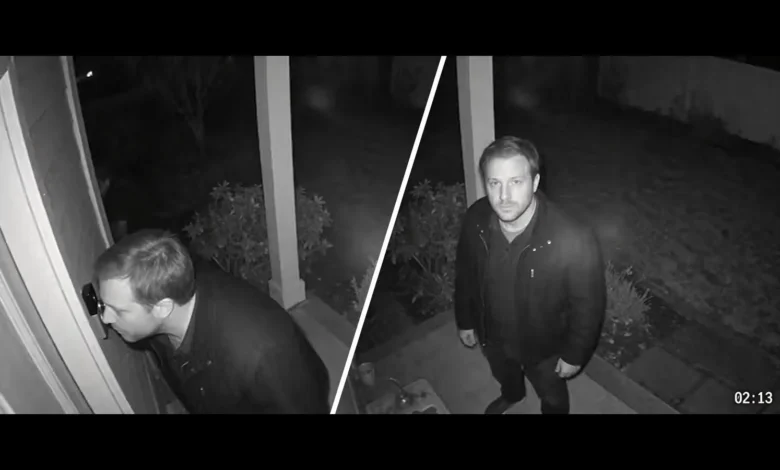
It’s a little after midnight and your kids have been asleep for hours when you hear it: three hard knocks on the front door, and a voice you don’t recognize calling out that there’s been an accident. Your first instinct is to flip on the porch light and open the door. That instinct is exactly what the person outside is counting on.
A knock in the middle of the night, followed by a story designed to get the door open, is the sound you need to learn to fear. It’s one of the oldest tricks in the book, and it still works because it turns plain kindness into a weapon against the family inside.
I spent years in uniform learning how people get into places they aren’t supposed to be. The easiest way into a locked house has never been a window or a back door. It’s always been a front door that somebody inside opened willingly.
Why the Night Knock Works So Well
Criminals who target occupied homes know that kicking in a door is loud, slow, and risky. The noise wakes the neighbors, gives the family time to grab a phone, and turns a quiet job into a scene. A knock costs them nothing, and it hands the most important decision of the night to the person inside. Plenty of burglars also knock first just to learn whether anyone is home, how many people live there, and whether there’s a dog. That’s why it pays to learn how to tell when someone at your door is lying to you long before you ever hear that knock.
And the stakes at night are real. The Bureau of Justice Statistics studied years of household burglaries and found that somebody was home in roughly a quarter of them. In about one in four of those cases, someone in the house became a victim of violence. Those are not movie numbers. Those are ordinary families, just like yours, who happened to be home when the wrong person came through the door.
The Night Knock Drill
When it happens, nobody should be figuring this out on the fly. Rehearse this drill with your family until it’s automatic:
- Do not open the door, and do not go near it right away. Stay back and out of line with the door and the windows beside it.
- Turn on the outside lights, not the inside lights. The goal is to see out without letting anyone see in.
- Look before you speak. Use a camera, a peephole, or a window at an angle, and count how many people are out there.
- Talk through the door, never through an open door. Tell them you are calling 911 for them, and then actually do it.
- Call 911 for any “emergency” they describe. A real accident needs an ambulance anyway, and a fake one usually ends right there.
- Gather the family into one room with a phone. Pick a room away from the entry points, and have one adult watch the hallway.
- If someone claims to be police, call 911 and ask dispatch to confirm. A real officer will understand, and a fake one will leave.
- Never step outside to check it out. If they are still there, you have just walked out of your fortress and into their plan.
If your door is the weak point, start with these 6 ways to protect your home from looters during a blackout.
The Fatal Funnel Is Your Front Door
In the military, a doorway is called a fatal funnel, because anyone standing in it is boxed in, silhouetted, and has nowhere to go. Professionals who clear buildings treat every doorway as the most dangerous spot in the structure. They move through it fast, and they never let someone on the other side choose the moment. The average homeowner does the opposite at midnight, stopping right in the frame, half asleep, lit from behind by the hallway light.
The moment you open that door, even a few inches, you have given up your best defense, which is a solid barrier between you and whoever is outside. A chain lock will not stop a determined shoulder, and a door that is cracked open can be slammed into a face before anyone sees who is there.
What to do: make it a house rule that at night, the door stays shut and locked, no matter what story comes through it. No exceptions, and everyone in the family knows it, including teenagers. The safest house is the one that never looks like an easy target, and a Navy SEAL’s plan to secure a home from the property line to the bedroom is the best place to start.
They Pick the House Before They Knock
Nobody picks a target at random. The people who do this for a living look for houses that are dark early, with no outside lights and no cameras. They look for tall hedges that hide the front door from the street, a car that hasn’t moved in days, and packages piling up on the porch. Above all, they look for people who will open the door.
What to do:
- Light up the entry. Motion lights on the front door, the side gate, and the back of the house take away the cover they count on.
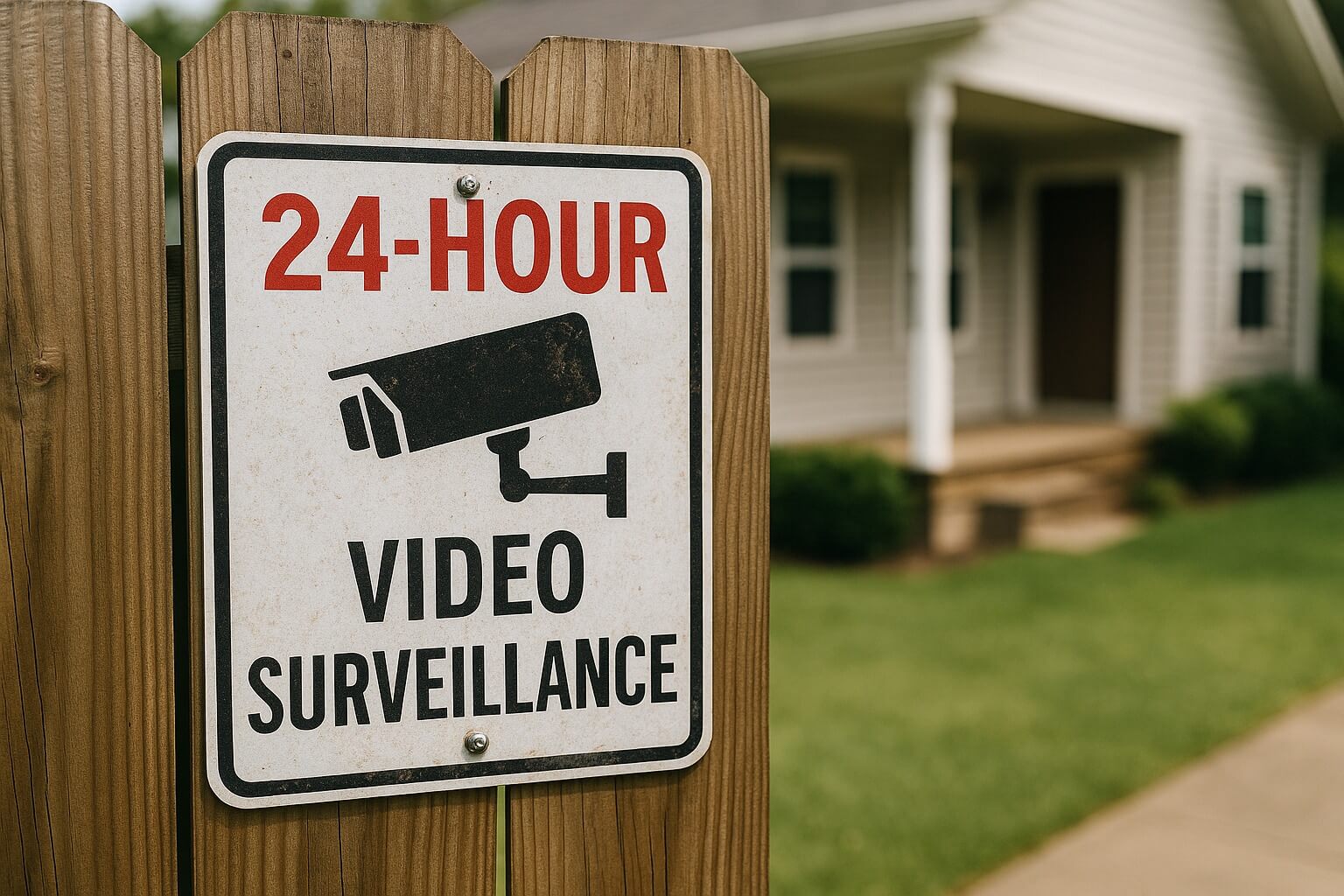
- Put a camera where it can be seen. A visible doorbell camera tells them the visit is being recorded.
- Trim the hedges so neighbors and passing cars can see your front door.
- Don’t advertise an empty house. Get packages picked up and keep a light on a timer when you’re away.
- Know your neighbors. A neighbor who recognizes your car and your routine, and who will call you when something looks wrong, is the cheapest alarm system there is.
The goal is to look like the worst target on the street. There are violence-free ways to keep intruders off your property, and none of them require you to fire a shot.
The Police Can’t Get There in Time
Everybody tells you to just call 911, and you absolutely should, every single time. But it’s worth understanding what that call really buys. It buys a dispatcher and a patrol car that may be minutes away, sometimes a lot of minutes, depending on where you live and how busy the night has been. In rural counties, a single deputy may be covering an area the size of a small state.
I’m not saying that to knock the men and women who answer those calls. I’m saying it because nobody in an official uniform will be standing between your family and that door in the first few minutes. That job is yours.
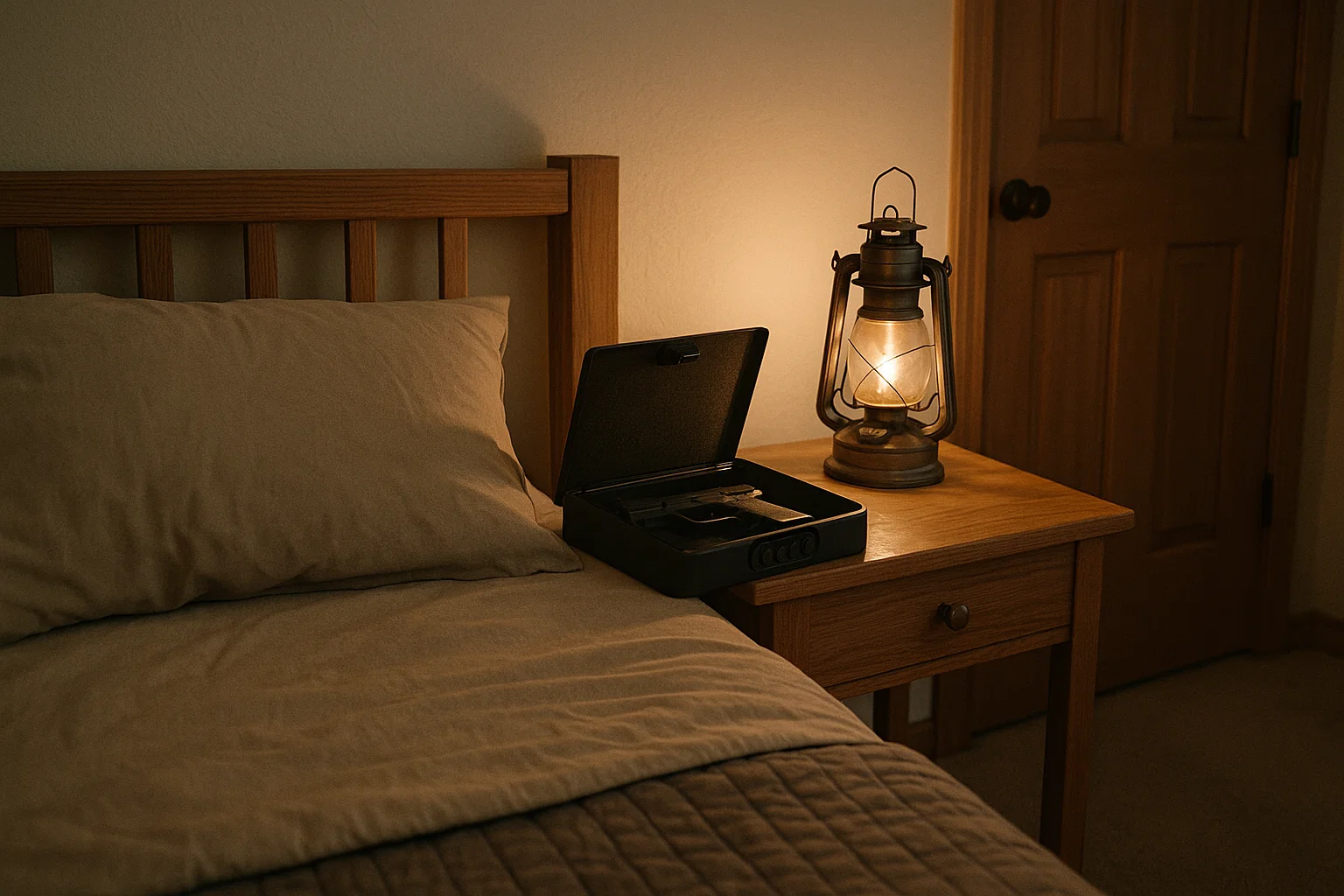
What to do: keep a charged phone by the bed, agree in advance on which room the family moves to, and make sure every adult knows the address and the fastest way to describe the house to a dispatcher.
If someone refuses to leave, or starts trying the doorknob and the windows, stay on the line with the dispatcher and keep everyone in that room. Describe everything you see and hear, how many people there are, what they look like, and which way they go. That call is recorded, and in the aftermath of a bad night, a calm, clear record of what happened can matter a great deal, both for catching them and for protecting you. And if someone in your family does get hurt, the next half hour is on you too. Know what to do first when 911 is forty minutes out, because nobody in the room will have time to look it up.
The Ruses That Work on Good People
The stories change, but they fall into a handful of patterns. There is the injured stranger who needs to use the phone, even though almost everyone carries one. There is the utility worker with an emergency at an hour when no utility does routine calls. There is the delivery driver who needs a signature in the dark. And there is the one that worries me most, the person who claims to be law enforcement and demands that the door open right now.
What to do: answer every one of them the same way. Offer to call 911 for the injured stranger. Call the utility’s published number, not one they give you. Tell the delivery driver to leave it or come back in daylight. And for anyone claiming to be police, call 911 and let dispatch confirm whether they sent someone to your address. In a real crisis, the knocks get more desperate, which is why what to say when people come to your door asking for food is worth knowing word for word.
What You Must Never Do
Fear makes people do foolish things, and a few of those things can land you in prison or in the ground.
Never fire a weapon through a door at someone you can’t see and haven’t identified. Never chase anyone off your property and into the street. And never assume the law in your state allows whatever you want inside your own home, because use-of-force rules vary a lot from state to state, and every gun owner needs to know theirs long before they ever need them.
And if the worst happens and someone is bleeding, the right order for direct pressure, packing and a tourniquet matters more than anything you own.
Your Door Is the Weak Link
Everything in this article only works if your door actually holds, and most residential doors don’t. The average front door is held in place by a short strike plate and a couple of screws that barely reach the frame. One good kick, and the whole thing gives. If the person outside decides they’re done knocking, all your planning comes down to how many seconds that door can buy you.
Joel Lambert spent ten years as a Navy SEAL and later served as a lead instructor at BUD/S. A Navy SEAL’s Bug-In Guide is what he wrote for families who want the house they already live in to be the safest place they can be: home security from the property line to the bedroom, the mistakes most families make, the hiding places intruders never check, and how to stay in control when something goes wrong at night.
The security chapter alone is worth a weekend of your time. Check it out here.

The Bottom Line
Most nights, a knock on the door will turn out to be nothing, just a neighbor, a lost driver, or a couple of kids playing a prank. But it only takes one night, one story, and one open door for everything you’ve built to be gone.
So make the decision now, while it’s daylight and you’re thinking clearly. At night, the door stays closed, the outside lights go on, and the call goes to 911 instead of you stepping into that doorway.
Because the person on the other side of that door already has a plan. The only question is whether you do.