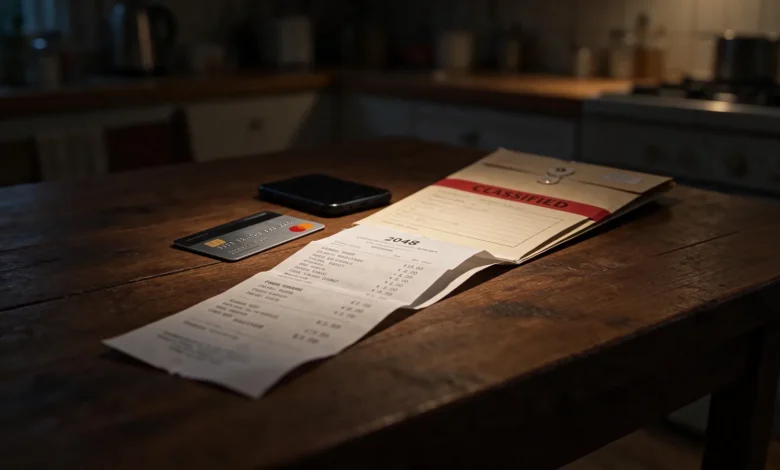
Every time you swipe a card, tap your phone, or scan a loyalty card at the register, somebody writes it down, and on a holiday shopping weekend the pen never stops moving. What you bought, where you bought it, what time it was, and how much you paid all go into a file with your name on it, and that file never gets thrown away.
Most people shrug that off because they’ve got nothing to hide. But preppers aren’t most people. When you start buying extra ammunition, bulk food, water filters and silver in the same year, you look a lot less like an ordinary shopper and a lot more like a category, and categories are exactly what the people collecting this data are looking for.
So who is reading that file, and what can you do about it before somebody decides to use it against you?
It’s Not a Theory Anymore
For years, anybody who talked about purchase tracking got called paranoid, a tinfoil-hat type who had watched too many movies. Then the government’s own paperwork started coming out.
In June 2023, the Office of the Director of National Intelligence declassified a report admitting that U.S. agencies buy what it calls “commercially available information.” In plain English, that means data private companies have collected about ordinary Americans, including information that can reveal where you go and what you do. A few months earlier, the director of the FBI told the Senate the bureau had bought location data in the past.
No warrant, no judge, just a purchase order. Information the government would need a court order to collect directly can simply be bought from a company that already collected it from you. That’s exactly why a former Navy SEAL wrote a whole chapter on how to stay completely off the government’s radar, legally and quietly.
Your Grocery Receipts Are Being Sold
The tracking starts somewhere boring: the checkout line. Some of the largest supermarket chains in the country have built entire data businesses on top of their loyalty programs, selling insights about what their customers buy to manufacturers and advertisers. Every time you scan that card to save a few cents, another line gets added to your record, and none of it ever gets deleted on its own.
Then data brokers buy that information, combine it with your address, your public records and your browsing, and build a profile they can sell to anybody willing to pay. The Federal Trade Commission even opened a study in 2024 into how companies use personal data like this to set the prices individual shoppers see.
What to do:
- Pay cash for your routine prepping purchases. Rice, beans, batteries and water don’t need to sit in anybody’s database.
- Skip the loyalty cards, or stop linking them to your name and phone number. That forty-cent discount is the price you’re being paid for your purchase history.
- Opt out of the big data brokers. Most of them have an opt-out process, and several states now require them to honor deletion requests. It’s tedious work, but it shrinks the file.
In a crisis, a stockpile that’s on record is a stockpile that can be found, so learn how to hide a stockpile so nobody realizes what they’re looking at.
Your Bank Is Reporting on You, and It Won’t Tell You
Most people have no idea how much their bank tells the government without ever asking them. Any cash transaction over $10,000 triggers a Currency Transaction Report to the Treasury Department. On top of that, banks file Suspicious Activity Reports whenever your account looks unusual to them, and the law forbids them from telling you they did it. You will never get a letter. Not once.
And they have tried to go further. In 2021, the Treasury Department pushed a plan that would have made banks report the money flowing in and out of nearly every account above $600 a year. It only died because millions of Americans made noise about it. Don’t think for a second the idea went away.
What to do:
- Keep some cash at home, in small bills and in a safe place. If an account ever gets frozen or the card network goes down, you can still buy food and fuel.
- Never split up deposits or withdrawals to stay under $10,000. That’s called structuring, and it’s a federal crime on its own, even when the money is completely clean. People have lost their savings over it. Privacy is legal; breaking the law to get it is not.
Your bank isn’t the only one keeping a file on you. Learn how to protect your digital life from hackers and data collectors.
The Gun Store Code
This one should get the attention of every gun owner in America. In 2022, the international body that sets credit card standards approved a brand-new merchant code just for firearms retailers. Before that, a gun shop purchase looked like any other sporting goods sale on your statement. With the new code, every swipe at a gun store could be flagged as exactly what it was.
Some states rushed to require the code, others passed laws banning it, and the big card companies hit pause after the backlash. But the code still exists, the infrastructure is already built, and it would take one new law or one quiet policy change to switch it back on.
What to do: pay cash for ammunition and accessories where your state allows it, so the purchase doesn’t land in a card company’s records. The federal background check and paperwork still apply to a firearm no matter how you pay, so follow the law to the letter. The point is to stop adding extra lines to your card history, not to dodge the legal process. And know your rights under martial law too, before anybody tries to tell you what they are.
Big Hauls Get Noticed
On their own, a bag of rice, a water filter, a case of ammo, a ham radio and a pallet of canned food mean nothing. Put them together in one profile, bought in one month, and you’ve told a stranger exactly who you are and what you’re preparing for. Data, then profile, then list. That’s the ladder, and most preppers climb it without realizing.
Think about how that profile looks to an insurer, a lender, or an official deciding who to keep an eye on during an emergency. You don’t get to see the file, you don’t get to correct it, and you don’t get a say in who buys it next. In a real crisis, a list of households with stored food, fuel and guns isn’t just marketing data anymore. It’s a shopping list. A SEAL’s rule is simple: never, ever tell anyone what you have, and his fool-proof OPSEC plan shows how to build up supplies without becoming a name on that list.
What to do:
- Spread your buying out over time. A stockpile built slowly looks like normal shopping. One giant haul looks like exactly what it is.
- Keep your preps off social media. Never post pictures of your pantry, your gear or your gun safe. That’s free intelligence for anybody who wants it, including the people who’d come looking for your supplies in a crisis.
Your Phone Is the Biggest Snitch You Own
Your phone knows where you shop, how long you stay, where you sleep, and where you drive afterward. Many of the free apps on it make their money by quietly selling that information to whoever is buying. That location history is exactly the kind of data that has been bought and sold, and, as the FBI admitted, purchased by government agencies too.
What to do: go into your settings tonight and turn off location access for every app that doesn’t truly need it. Review which apps can see your contacts, photos and microphone, delete the ones you don’t use, and turn off ad personalization. It takes twenty minutes and cuts off one of the biggest pipelines feeding your profile. There’s also a clever way to stop your phone from tracking you that goes further than the settings menu.
It Already Happened in Canada
If you think nobody would ever turn this information against ordinary people, look north. In February 2022, during the trucker protests in Ottawa, the Canadian government invoked its Emergencies Act, and banks were ordered to freeze accounts connected to the protests. Some of the people caught up in it had done nothing more than donate money. No trial, no conviction, just a frozen account and no way to pay the bills.
Two years later, a federal court ruled the government’s use of that power was unreasonable, but by then the damage was done. That was Canada, a peaceful neighbor with a banking system much like ours, and it happened in a matter of days. It can happen here.
What to do: keep part of your savings in things nobody can freeze with a keyboard, like stored food, tools, and precious metals, and keep at least a few weeks of supplies at home. If your accounts were locked tomorrow, you’d want to be able to feed your family without them.
When money stops working, ordinary things become currency. These are 75 items worth more than gold in a crisis, and most of them cost a few dollars today.

The Cashless Trap
Everything I’ve described depends on one thing, which is that your money lives inside a system somebody else controls, and that system is getting less optional every year. The Federal Reserve’s own surveys show cash making up a shrinking share of everyday purchases. More stores refuse cash entirely, and governments around the world, including China’s, are already testing digital currencies that would put every transaction on a central ledger. Washington has backed away from the idea for now, but plans like that have a habit of coming back under a new name.
The people who come through a financial crisis in one piece are the ones who understood how the money system really works, and moved part of their wealth and supplies outside it before anyone told them to.
Want to know how a Navy SEAL keeps his family off the radar? Start with A Navy SEAL’s Bug-In Guide. Joel Lambert served ten years as a Navy SEAL, and the intelligence chapter deals with exactly this problem: OPSEC, staying off the radar, keeping your phone from tracking you, knowing your rights under martial law, and making your home and supplies invisible to the people who’d come looking for them. The rest of the book covers food, water, power and security, so your family can stay put and stay independent if the system turns against you.
Click here to see the full guide while the system still works the way it does today.
Final Thoughts
Nobody is going to send you a notice the day your purchases become a problem. In Canada, people found out when their cards stopped working at the gas pump.
You don’t need to panic or drop off the grid. You need to stop giving away information for free, keep some cash and supplies outside the system, and make your preparations quietly. The less they know about what you have, the less anybody can take away.
The data they’re collecting today doesn’t expire. It will still be sitting there on the day somebody decides to use it.