9 Ingredients That Turn Basic Stockpile Foods Into Meals You’ll Actually Eat

The US Army has spent decades on a problem most preppers have never heard of: soldiers who are given enough food and still lose weight.
Not because the rations lack calories. Because people stop eating food they are tired of. In ration studies, adding supplemental items to an MRE pushed daily intake from 2,009 calories to 2,830 in one trial, and from 2,802 to 3,553 in another. Same soldiers, same conditions, same nutritional requirement. The only thing that changed was whether the food was worth eating.
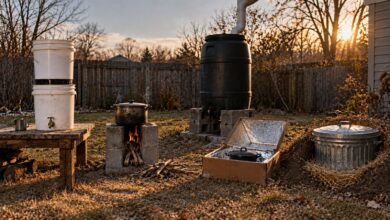
Your stockpile has the same problem and no procurement budget behind it. This covers the nine ingredients that fix it, how much of each to store, what they actually do at the chemical level, and the one your rice and beans genuinely cannot function without.
Why Bland Food Defeats People
Appetite is not driven by what your body needs. It is driven by a mix of what is in the bowl and what is happening around it, and both of those come apart under stress.
The military calls the result underconsumption, and the research points at two separate levers.
The first is the food. In the ration trials above, adding new and more appealing items raised daily intake substantially, because variety and novelty pull consumption back up. That is the lever this article is about, and it is the one you control with a shopping list.
The second lever is the one almost nobody talks about, and the National Academies data makes the case bluntly. Soldiers in the field rated their MREs at 7.05 on a nine-point scale and ate 2,189 calories a day, dropping toward 1,681 as the exercise went on. MIT students eating the identical rations in a laboratory rated them lower, at 6.05, and ate 3,149 calories.
Read that twice. The group that liked the food less ate roughly a thousand calories more of it.
The researchers concluded that the difference was the eating situation rather than the food. The students had tables and chairs, set mealtimes, real tableware, and the ability to heat what they were eating. The soldiers had none of that. The conclusion in the text is that the factors controlling consumption in natural eating situations are the situational ones, the things that make it more or less convenient to sit down and eat.
That is worth more to you than any seasoning. In a long outage, a hot meal served at a set time at an actual table, on real plates, is not a comfort. It is a countermeasure with data behind it.
Now put a bowl of plain boiled rice in front of a nine-year-old on day eleven, eaten cold, standing up, at no particular hour.
The failure mode is not starvation. It is a full pantry and a family that stops eating from it.
1. Salt
Not a seasoning. A requirement, and the one item here with no substitute at any price.
Salt makes food taste like food, but it is also doing work your body cannot do without. You lose sodium through sweat, and a summer outage with manual labor drains it faster than most people expect. It is also a preservative, for the reason covered further down: dissolved salt binds free water, and bacteria cannot use water that is bound.
How much. Roughly five pounds per person per year at a teaspoon a day, and that figure covers eating only. If you plan to cure or brine anything, multiply it. Store plain non-iodized salt for preserving and iodized for the table, because iodine matters in a diet with no seafood in it.
Shelf life. Indefinite. It is a mineral. Keep it dry and it outlives you.
Salt is also the single best trade good on this list. It is cheap now, it is universally wanted, and nobody can make it.
2. Fat
Here is the part that should change how you shop.
Take the standard prepper base of rice and beans. Long-grain white rice gets about 1.6 percent of its calories from fat. Pinto beans, about 3.2 percent. Blend them at twenty pounds of rice to eight of beans and you get roughly 2 percent of calories from fat.
Human diets run around 20 to 35 percent. You are not slightly short. You are off by a factor of ten.
Fat is not a comfort item in this equation. It carries fat-soluble vitamins, it is what makes food feel like a meal instead of a filler, and it is the densest calorie source available at roughly 120 calories a tablespoon. Fat is also what makes spices work, because most aromatic compounds dissolve in oil and not in water. Throw curry powder into boiling water and you get cloudy water. Bloom it in hot oil first and you get a different food.
How much. Closing that gap to a reasonable 20 percent takes about three tablespoons per person per day. Run the year and that is roughly four and a quarter gallons per person, or about seventeen gallons for a family of four.
Almost nobody stores that. Go look.
Shelf life is the catch. Fat is the shortest-lived thing in your pantry by a wide margin. Many common cooking oils have a best-quality window measured in months to roughly a year or more, depending on the specific oil and how it is stored, and storage conditions move that number more than the label does. Coconut oil does better than most because it is highly saturated, and saturation is what resists oxidation. Ghee keeps well at room temperature because the milk solids and water have been removed. Rancidity is oxygen, heat, and light doing their work, so buy in sizes you will actually finish, keep it cool and dark, and rotate it hard.
If you stockpile one thing after reading this article, make it fat.
3. Bouillon
Bouillon turns water into food, and it does it through a mechanism worth understanding.
The savory taste we call umami comes from free glutamates, and the human tongue has receptors specifically for them. That is not a marketing claim, it is a distinct basic taste alongside sweet, salt, sour, and bitter.
Practically, that is all you need to know: rice cooked in broth is a different food from rice cooked in water, at the cost of a cube.
How much. One to two cubes or teaspoons per person per day of active use. A year of daily cooking runs a few hundred cubes, which is less shelf space than it sounds.
Shelf life. Cubes and powder run one to two years by the label and generally keep well past it if they stay dry, since they are mostly salt. Moisture is the enemy. Paste concentrates last well refrigerated but are a poor choice for a no-power scenario.
4. Dried Onion
Nearly every cuisine on earth starts by cooking an allium in fat. That is not coincidence, it is the base layer that everything else is built on.
Dried minced onion rehydrates into something close enough to the real thing to anchor a dish, and onion powder disperses instantly for when you want the flavor without the texture. Both are dramatically more shelf-stable than the fresh version, which sprouts and rots on a timeline you cannot rely on.
How much. A pound of dried minced onion is a great deal of cooking. Two pounds per person per year is generous.
Shelf life. Two to three years in the original container, considerably longer sealed in mylar with an oxygen absorber. It will not become unsafe, it will fade, and faded is the failure mode for every dried aromatic on this list.
5. Garlic
The second half of the base layer, and the one with a bonus.
Garlic brings a sulfur-compound profile that nothing else replicates, and it works in every direction you might take a pot of beans: Mexican, Italian, Indian, Chinese, Middle Eastern. Granulated garlic holds up better in storage than fresh, which sprouts, and better than garlic salt, which is mostly salt you are paying a premium for.
It also has real antimicrobial activity, which is why it shows up in traditional medicine across unrelated cultures. Be precise about that claim though: it is not a substitute for an antibiotic, and treating it as one is how people get hurt. It is a food that happens to have some useful properties, not a drug.
How much. One to two pounds of granulated garlic per person per year.
Shelf life. Three to four years sealed, with the same fading problem as onion.
6. Vinegar
The missing note in almost every survival meal, and the one most people never think about.
Long-cooked starchy food is heavy, flat, and samey. Acid cuts through that. A splash of vinegar at the end of a pot of beans does something no amount of additional salt can do, because it hits a different receptor entirely and resets the palate. Restaurant kitchens reach for acid when a dish tastes dull, and they are not doing it for the chemistry lecture.
It also preserves, though be careful how you hold that idea. The pH 4.6 line you see quoted everywhere is specifically about Clostridium botulinum, which does not grow in properly acidified food. It is not a general off switch for spoilage, and plenty of molds and yeasts are perfectly happy in acidic conditions.
More importantly, acidity alone is not a safety method. Safe pickling and canning run on tested recipes and tested processes, where the acid level, the ingredients, and the processing time were validated together. “I added vinegar until it tasted sour enough” is not a preservation plan, and this is the one area in home food storage where improvising has killed people. Use a tested recipe from a reputable source, every time.
How much. A gallon per person per year covers cooking and light pickling with room to spare.
Shelf life. Effectively indefinite for distilled white vinegar. It is already an acidic, hostile environment, which is precisely why it works as a preservative. Apple cider vinegar may develop a cloudy mother over time, which is harmless.
Store white for preserving and cleaning, cider for flavor.
7. Chili
Capsaicin creates the sensation of heat by triggering a receptor that also responds to actual temperature, which is why your mouth genuinely believes something hot is happening.
That matters here for one reason, and it is not appetite. Research on capsaicin and hunger is mixed and if anything leans toward increased satiety, so anyone telling you chili makes people eat more is going past the evidence. What it reliably does is change the sensory profile of an identical meal. Two bowls of the same beans register as two different dinners when one of them is hot, and that is precisely the lever you need against monotony.
Store more than one form, since they are not interchangeable. Cayenne for clean heat. Crushed red pepper for texture and slower release. Chili powder, which is usually a blend containing cumin and oregano, for building a whole flavor direction at once. Bottled hot sauce for the acid and heat together, though check the label, because a vinegar-based sauce stores far better than a fresh pepper mash.
How much. A pound of dried chili per person per year is plenty for most households. Adjust for what your family actually eats.
Shelf life. Two to three years for ground, longer for whole dried pods, which hold their oils better. Cayenne and paprika are especially prone to fading in light, so keep them dark.
8. Sugar
Sugar in a stockpile is not a treat, and treating it as optional is a mistake.
It makes bitter and bland things palatable, it feeds yeast if you are baking, it balances acid and heat, and it is pure available energy when people are working hard. Sugar also preserves, though far less efficiently than salt by weight. It takes roughly 55 percent sugar by weight to suppress bacterial growth where about 13 percent salt does the same job, which is why every preserved-meat tradition on earth runs on salt and every jam recipe calls for an amount of sugar that looks insane.
Honey deserves its own line. It is antimicrobial in a genuinely unusual way, being low in water, acidic, and producing small amounts of hydrogen peroxide, and properly sealed honey does not spoil. It will crystallize, which is not spoilage and reverses with gentle warming.
How much. Ten to twenty pounds per person per year depending on whether you bake.
Shelf life. White sugar is indefinite if kept dry. Do not put an oxygen absorber in with it, because it will set into a brick. Brown sugar hardens but is recoverable. Honey is indefinite.
9. A Spice Blend
The lever that makes one pot of beans into a month of different dinners.
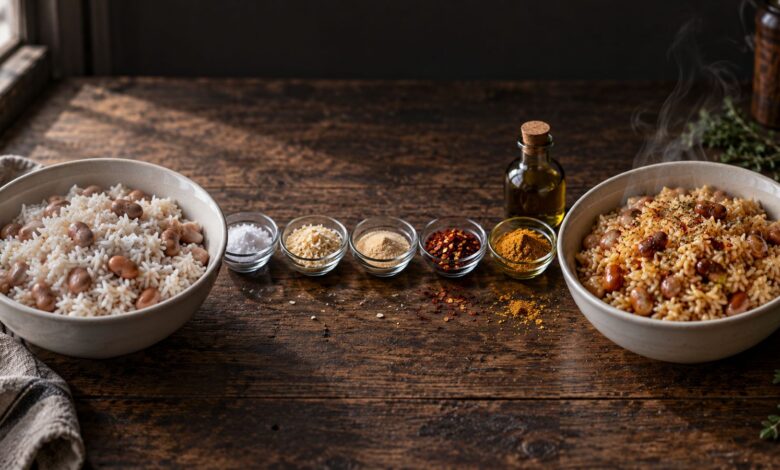
Individual spices are useful. A blend is a decision someone already made for you, and in a stressful week you want fewer decisions. Curry powder takes rice and lentils somewhere entirely different. Italian seasoning plus tomato powder turns the same beans into something else. Taco seasoning is a third direction. Five-spice, a fourth.
This is the cheapest possible answer to appetite fatigue, and the research says variety is exactly what drives intake back up.
How much. Half a pound each of three or four blends your family already likes. Do not stockpile a flavor nobody in your house eats now, because scarcity does not create new preferences. It hardens the ones people already have.
Shelf life. Two to three years, less for blends containing dried herbs, which fade fastest of all.
What Nobody Tells You About Fat
Go back and look at the arithmetic from item two, because it is the part of this article that should actually change what you buy.
Seventeen gallons of cooking oil a year for a family of four, to bring a rice and beans base up to a normal proportion of dietary fat. That is roughly a gallon and a half a month, sitting somewhere cool and dark, rotated before it turns.
Now notice what else is true. Fat is the shortest-lived item in the entire pantry. Rice sealed properly is good for decades. Salt and sugar are effectively permanent. Beans go hard but stay safe more or less forever. Oil gives you months to a year or two depending on the oil, and then it quietly oxidizes, and rancid oil is both unpleasant and not something you want to be eating in quantity.
So the food group you need most is the one you can store for the shortest time, which means it cannot be solved by buying a pallet once. It has to be a rotation habit, the same way you rotate water.
This is also why the long-term prepper answer to fat is usually production rather than storage. Lard from a pig, tallow from a cow, butter from a milk animal, oil from sunflowers or peanuts. Every traditional food culture that survived without a grocery store had a fat source it renewed annually, because none of them could store it either.
The stockpile buys you the first year. After that, fat is a thing you either make or go without, and going without is not one of the options.
The Honest Limitation
None of this fixes a nutritional hole. It fixes an eating problem, which is a different thing, and pretending otherwise would be dishonest.
Rice, beans, oil, and nine seasonings will keep a person alive and functional for a long time, but it is not a complete diet. You are short on vitamin C, vitamin A, and several B vitamins, and no amount of curry powder changes that. Sprouting seeds, a small garden, dried or canned vegetables, and a multivitamin are the actual answers, and they belong in a different article.
What the nine ingredients here buy you is the thing that has to come first. Food people will keep eating, under stress, on day forty, when they are tired and cold and the novelty is long gone. A perfectly balanced stockpile that nobody touches feeds nobody at all.
Do This This Week
Cook a meal from your actual stockpile. Not a recipe you found, the literal bag of rice and the literal bag of beans in your storage, with only what you have stored to season them.
You will learn more in that one dinner than in a month of reading, and you will find out which of these nine you do not own.
Then buy the oil. Whatever else you skip, buy the oil.