Blackouts do not shut everything down at once. They interrupt simple actions you rely on without thinking.
You lose light when you need both hands. Food is there, but you cannot open it. Small tasks start taking effort. None of this feels dramatic. It feels constant and tiring.

The right tools for power outages keep these moments from stacking up. Small tools decide if the outage stays manageable or if it slowly wears you down.
Light That Lets You Work, Not Just See
The first minutes of a blackout at night are predictable. You wake up. You sit up. You reach for light before you fully think.
A handheld flashlight seems like the obvious answer. It lets you see, but it costs you a hand. That slows everything. You cannot carry items, open doors, or steady yourself without stopping. You keep setting the light down, then picking it back up. That friction adds stress fast.
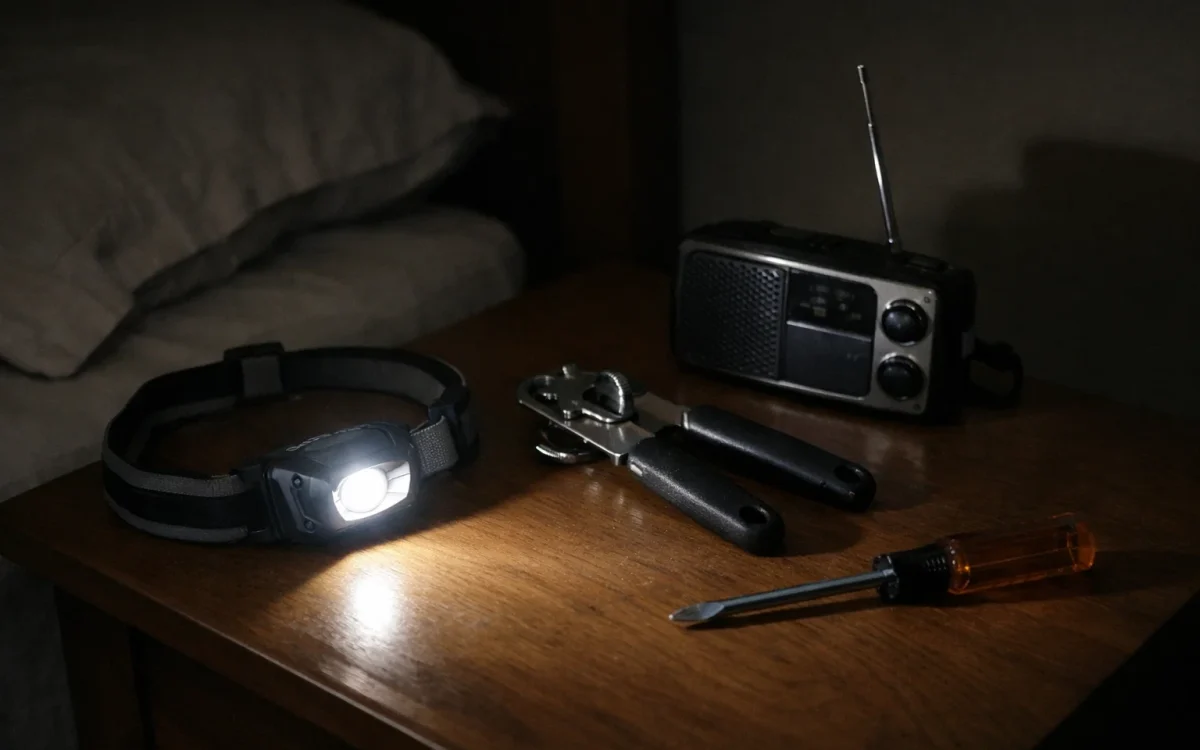
Hands free lighting fixes this problem right away. A headlamp by the bed or a small clip light you can attach to clothing keeps your hands useful. This is one of the simplest tools for power outages, yet many homes still overlook it. The difference shows up the first time you try to move through a hallway, help someone else, or handle a quick task without fumbling.
Storage causes more lighting failures than broken gear. Lights end up in drawers, closets, or the garage. In the dark, those places are hard to reach. If you have to search for light, you already lost time. Lighting works best when it lives where you wake up and where you step first.
Lighting problems create stress before anything else does. Darkness makes every movement feel risky. Your body reacts even if you try to stay calm. Good tools for power outages remove that pressure early. Once you can see and work at the same time, the rest of the outage feels easier to manage.
When Food Exists but You Still Can’t Eat
Most blackout food problems are not shortages. You already have food in your house. The problem is getting to it.
Cans need opening. Lids stick. Packaging fights back. Prep steps that feel small during normal days turn into barriers when the lights are out. These are access failures, not supply failures.
Early in an outage, cooking gear does not matter much. You can heat food later. You cannot eat what you cannot open. A simple manual tool, like a can opener that does not need power, solves this faster than any stove. This is one of those tools for power outages that earns its place right away.
Hunger changes how you think. Add friction and patience disappears. Small delays turn into irritation, then rushed choices. Good tools for power outages remove these barriers so meals stay simple and steady, even when the outage lasts longer than expected.
The Battery Drain Nobody Notices Until It’s Too Late
Battery use jumps the moment the power goes out. Lights stay on longer. Radios run for hours. Phones get checked again and again. At first, it feels manageable. Then the drain catches up.
Powered solutions come with a hidden cost. Every device pulls from the same supply. You start making tradeoffs without noticing. Light or updates. Comfort or awareness. This is where many tools for power outages quietly fall short.
Manual alternatives change the balance. When a task does not need power, it does not compete with anything else. A hand powered option or a simple mechanical tool keeps batteries for what truly needs them.
Battery stockpiles fail sooner than people expect. Nights are long. Stress pushes use higher than planned. Good tools for power outages reduce dependence instead of adding to it. That difference becomes clear before the blackout ends.
Tiny Repair Tools That Stop Small Problems From Multiplying
Small failures show up early. Within the first day, things start to loosen, stick, or shift just enough to cause trouble. Cabinet doors sag. Screws back out. A latch stops lining up. None of this feels urgent at first.
Minor repairs become major irritations because they repeat. You deal with the same loose handle ten times instead of fixing it once. Each delay slows you down and wears on your patience. Over time, these small problems make your home feel harder to live in.
In real homes, the same items fail first. Doors, cabinets, battery compartments, and anything that gets handled often. These fixes do not need heavy tools. They need simple repair tools you can grab without thinking.
Full toolboxes look useful, but they work against you during a blackout. They sit in garages or basements. They take time to open and search. Compact repair tools stay nearby and solve problems fast. Speed matters when light is limited and stress is high.
One size fits all multitools sound appealing. In practice, they slip, pinch, and lack control. You fight the tool instead of fixing the problem. Under pressure, that friction feels worse than the repair itself.
People reach for tools that feel familiar and steady. A small screwdriver, basic pliers, or a simple wrench solves more problems than complex gear. These tools for power outages stop small issues before they multiply and drain your energy.
Information Gaps Cause Bad Decisions Faster Than Darkness
Not knowing causes more trouble than not seeing. Darkness slows movement. Uncertainty changes behavior.
When updates stop, people start guessing. Phones get checked too often. Decisions get rushed. Stress builds because there is no clear sense of timing or direction.
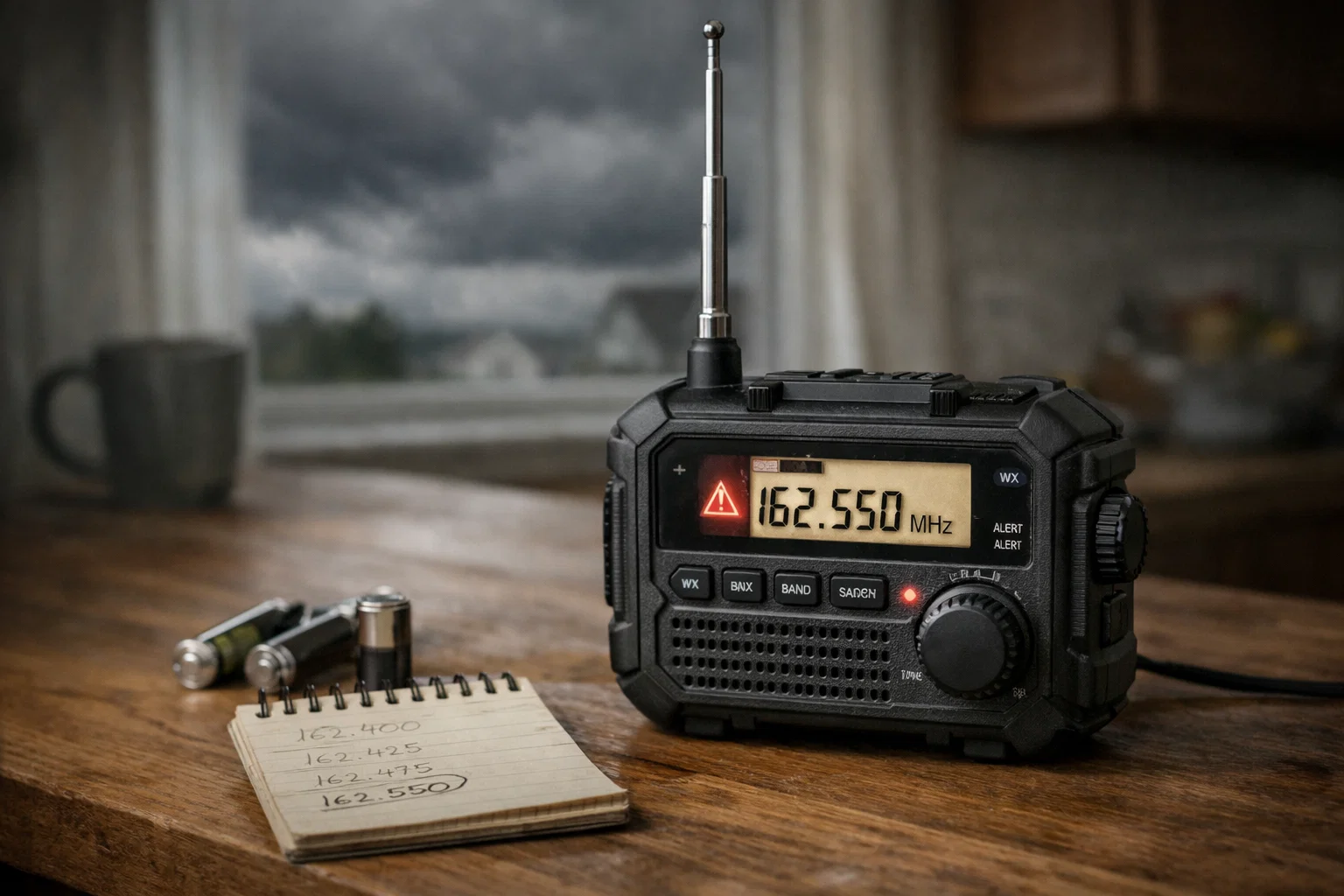
Simple, low energy tools keep you informed without draining resources. A small radio or a basic clock gives you context and pacing. These tools for power outages help you decide instead of react.
Redundancy matters more than features. One source can fail. A backup keeps information steady. When updates stay reliable, your decisions stay calmer.
Where These Tools Must Live to Be Useful
Storage decides whether tools help or fail. Centralized storage looks neat, but it slows you down. When everything sits in one place, you have to reach it first.
Distributed access works better. Tools placed where you already are save time and reduce stress. This matters most at night, when your body is still half asleep and your thinking is slower.
Visit the store page to grab the best deals!
Bedroom first placement follows real behavior. You reach for light before you fully wake up. A headlamp or small light within arm’s reach works better than anything stored down the hall. The same rule applies to other tools for power outages you may need quickly.
Nighttime changes how your hands work. Stress reduces fine motor control. Small buttons feel smaller. Searching through boxes wastes energy and patience.
Organized setups often fail because they assume calm conditions. During a blackout, speed matters more than order. Good tools for power outages stay visible, reachable, and easy to grab without thought.
Why Small Tools Outperform Big Gear During Blackouts
Speed matters more than capability during a blackout. A tool you can grab and use right away beats powerful gear that needs setup.
Small tools reduce decisions. You do not stop to plan or troubleshoot. You use them and move on. That mental relief matters when pressure is already high.
Solving problems right away keeps panic low and fatigue in check. Good tools for power outages keep daily life moving instead of turning every task into a project.
Blackouts reward friction reduction, not impressive gear. The tools that matter most remove small obstacles before they slow you down.
Small tools keep your routine intact when systems pause. You still move safely. You still eat. You still fix minor problems without turning them into events. That steadiness protects your energy and your judgment.
Here is the rule to remember. If you cannot grab a tool half awake and use it with one hand, it will not help you in the first hours. Preparedness that works often feels boring. Problems stay small. That is the point.