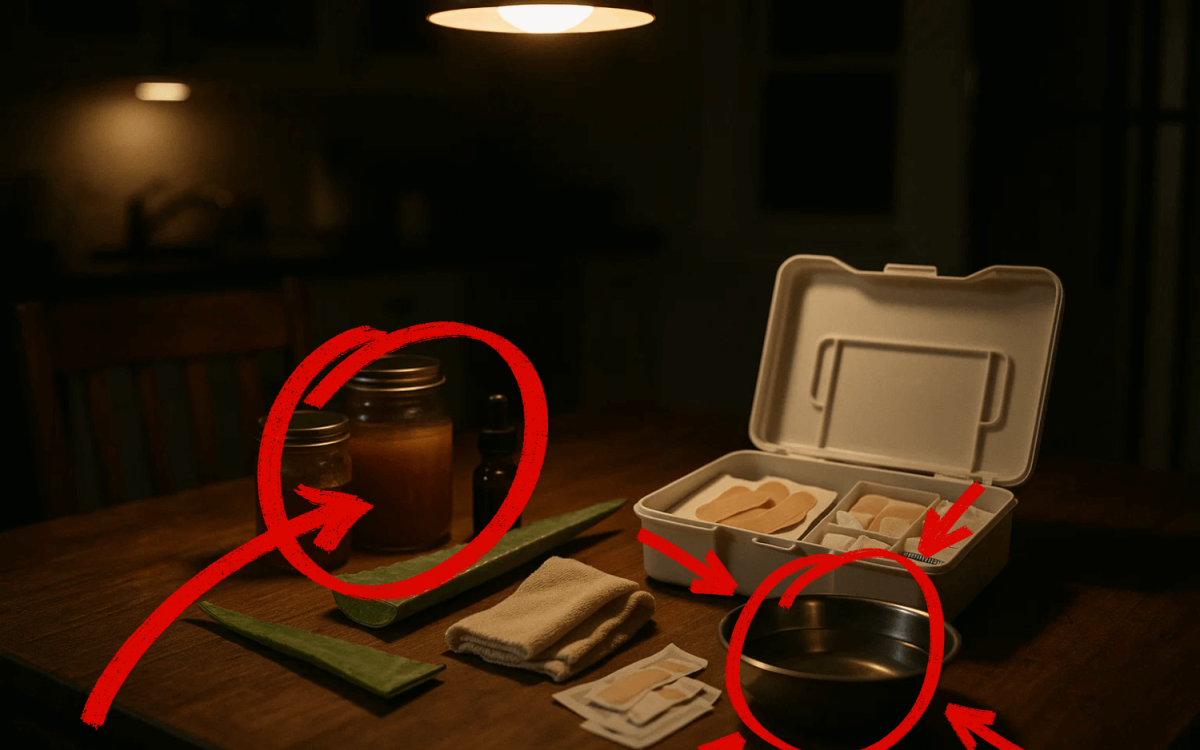
Most people think they’re prepared because they own a first aid kit. You probably do too. It’s clean, organized, and sitting where you can reach it fast. The problem is that store-bought kits are designed to create confidence, not to handle what happens when a medical problem doesn’t end quickly.
Most of these kits fail once care lasts longer than a few hours. They’re built for minor injuries, small cuts, scrapes, quick fixes. They quietly assume pharmacies are open, doctors are available, and refills are easy to get. Take those assumptions away, and the kit stops being a solution and starts being a reminder of what you don’t have.
This is where regret sets in. Injuries don’t stay minor, and access doesn’t come back on demand. Pain escalates. Infection spreads. And that’s when people realize the hard truth: bandages and antibiotics alone are not real medical preparedness.
Why First Aid Kits and Antibiotics Aren’t Enough
First aid kits are built to handle the surface of a problem. They stop bleeding, cover wounds, and make things look under control. What they don’t do is deal with what comes next, infection, swelling, pain, and complications that show up hours or days later. That’s where most kits quietly fail.
Antibiotics create a different kind of false security. People plan around them as if they’re guaranteed. They’re not. They disappear early, they’re tightly controlled, and they only work if you have them at the right moment. Once access is delayed or cut off, antibiotics stop being part of your plan whether you like it or not.
This is the uncomfortable warning most people avoid. If your medical preparedness relies only on bandages and pills, you’re exposed. You’re prepared for the first hour, not the second day. And real medical problems don’t care how well-stocked your kit looked at the beginning.
The Medical Problems That Get Dangerous Fast
Most medical problems don’t start as emergencies. They start small and get ignored. A cut that wasn’t cleaned properly. A blister that broke open. A minor burn from cooking or a candle. At first, everything seems manageable. Then the area gets warm, swollen, painful. Infection sets in quietly, after the bleeding stops, when you think the danger has passed. By the time it’s obvious something is wrong, you’re already behind.
Dental pain works the same way, but hits harder. Once it starts, it doesn’t let go. You can’t sleep, you can’t focus, and you can’t function normally. Burns linger, heal slowly, and stay exposed to infection for weeks. Wounds that looked “handled” on day one get worse on day two. And when access is gone, no dentist, no clinic, no pharmacy, these problems stop being inconveniences and start breaking people down. Not because they’re dramatic, but because they don’t wait, they don’t pause, and they don’t care how prepared you thought you were.
When Antibiotics Are Gone, What’s Left
When pharmacies are closed and prescriptions aren’t available, waiting stops being a plan. You don’t get to pause a medical problem until the system comes back online. Infection keeps moving. Pain keeps building. Healing doesn’t happen on its own just because you need it to.
What you can still do is limited, but it matters. You can reduce infection before it spreads. You can control pain enough to function and think clearly. You can support healing instead of letting things deteriorate while you hope for access to return.
This is the shift most people never make. Remedies aren’t “alternatives” or lifestyle choices. They’re the fallback when pills are gone and help isn’t coming. And if you didn’t prepare for that reality ahead of time, you’re left with nothing but waiting, and waiting is how small problems turn serious.
Natural Remedies for Infection Control
When antibiotics aren’t available, doing nothing is the fastest way to lose control of the situation. Infection doesn’t wait for access to return. The goal here isn’t to cure everything, it’s to slow it down, contain it, and keep it from spreading before it turns serious.
One of the most reliable options people fall back on is medical-grade honey, used topically. It’s been relied on for a long time because it helps reduce bacterial load and creates an environment where infection struggles to grow. This is useful for surface wounds, slow-healing cuts, and areas that need protection while healing.
Another old-school option is sugar dressings. It sounds simple, but sugar works by drawing moisture out of bacteria, making it harder for them to multiply. It’s been used historically when nothing else was available, especially for wounds that show early signs of infection.
For swelling, boils, or areas that feel like infection is starting under the surface, activated charcoal poultices are often used. The goal isn’t magic, it’s drawing and containing, especially when combined with proper cleaning and protection.
These remedies work best when layered. Proper cleaning and irrigation first. Then a topical option like honey or sugar. Then protection and monitoring. None of this is instant. It requires early action and attention. But when antibiotics are gone, this approach is far better than watching a small infection turn into something you can’t manage.
Natural Remedies for Dental Pain When Care Is Unavailable
Dental pain doesn’t pause just because care isn’t available. It keeps you awake, wears you down, and destroys your ability to function. When there’s no dentist and no refills, the goal becomes simple: control pain, reduce inflammation, and stay operational.
For direct pain relief, clove oil is one of the most commonly relied-on options. Used carefully and in small amounts, it provides temporary numbing and helps take the edge off intense tooth or gum pain. Some people also rely on toothache plant for a similar numbing effect when it’s available.

To reduce irritation and bacterial buildup in the mouth, saltwater rinses are a basic but effective step. They don’t fix the problem, but they help calm inflamed tissue and keep things from getting worse. When swelling is involved, cold compresses on the outside of the jaw can reduce pain and pressure.
These remedies are often combined, rinsing to clean the area, numbing to control pain, and compression to reduce swelling. They don’t solve the underlying issue. They buy time. They help you sleep, think, and function while you wait for real treatment to become possible again.
That’s the reality. Dental remedies are temporary. But temporary relief can mean the difference between staying functional and being completely shut down when you’re already short on options.
Natural Burn Care When Clinics Aren’t an Option
Burns don’t require disasters to happen. They happen at home, usually when you’re tired, rushed, or improvising. Healing takes time, and the real danger isn’t the initial pain, it’s infection setting in while the skin is trying to recover.
The first priority with burns is cooling and calming the tissue. Clean, cool water early limits damage and slows how deep the injury goes. After that, pure aloe vera is commonly used to soothe irritated skin and reduce inflammation. It doesn’t fix everything, but it helps calm tissue that’s been stressed and damaged.
Once the skin is compromised, infection prevention becomes critical. This is where medical-grade or raw honey is often relied on as a topical layer. It helps control bacterial growth and keeps the wound environment from drying out, which supports slower, safer healing. For later stages, herbal-infused oils like calendula or plantain are traditionally used to support skin repair once the acute phase has passed.
Just as important is knowing what to avoid. Heavy oils, butter, or sealing substances used too early can trap heat and make damage worse. Burns need protection, not suffocation. Clean coverage with non-stick dressings matters more than improvised fixes that feel comforting in the moment.
Burns are slow injuries. They don’t resolve overnight, and neglect compounds the damage. Consistent care, monitoring, and infection control are what keep a manageable burn from turning into a long-term problem when clinics aren’t an option.
Why Knowledge-Based Medical Prep Matters More Than Gear
Every physical supply has a limit. It gets used, expires, or runs out faster than you expect. Gear gives you a head start, but it doesn’t last forever, and it doesn’t help if you don’t know how to use it correctly.
Knowledge doesn’t disappear when shelves are empty. It doesn’t depend on refills, delivery trucks, or permissions. When you understand how to control infection, manage pain, and support healing, you’re not relying on luck or access, you’re relying on yourself.
That’s where real control comes from. Remedies paired with understanding turn medical prep from a pile of gear into an actual plan. When systems fail and supplies thin out, what you know becomes the most reliable medical resource you have.
What People Used Before Pharmacies Existed
Modern medicine works, when you can access it. The problem is how completely dependent most people have become on it. Prescriptions, refills, appointments, and supply chains are treated as guarantees. They aren’t. And when they break, most people realize they never built a backup.

Before pharmacies existed, people still dealt with infections, burns, wounds, and pain. Not through guesswork, but through documented remedies and practical treatment knowledge passed down because it worked often enough to matter. These methods weren’t perfect, but they gave people options when there was no one else to rely on.
Improvisation sounds good until you’re stressed, tired, and dealing with pain. That’s when mistakes happen. That’s why having a reference matters, something organized, tested, and clear enough to use when thinking straight is hard. Resources like Forgotten Home Apothecary exist for exactly that reason: not to replace modern medicine, but to fill the gap when systems aren’t there to help you.
Most medical regret doesn’t come from the injury itself. It comes from waiting. From assuming you’ll deal with it later, when later never shows up. Medical problems don’t stay manageable just because access is delayed.
Infections spread, pain escalates, and small issues turn serious fast. Systems don’t pause to catch up with you, and they don’t rush back online when you need them most.
Preparation now is the only thing that prevents suffering later. Once you’re dealing with pain, infection, or limited function, your choices are already gone.
The Video Every Prepper’s Talking About: