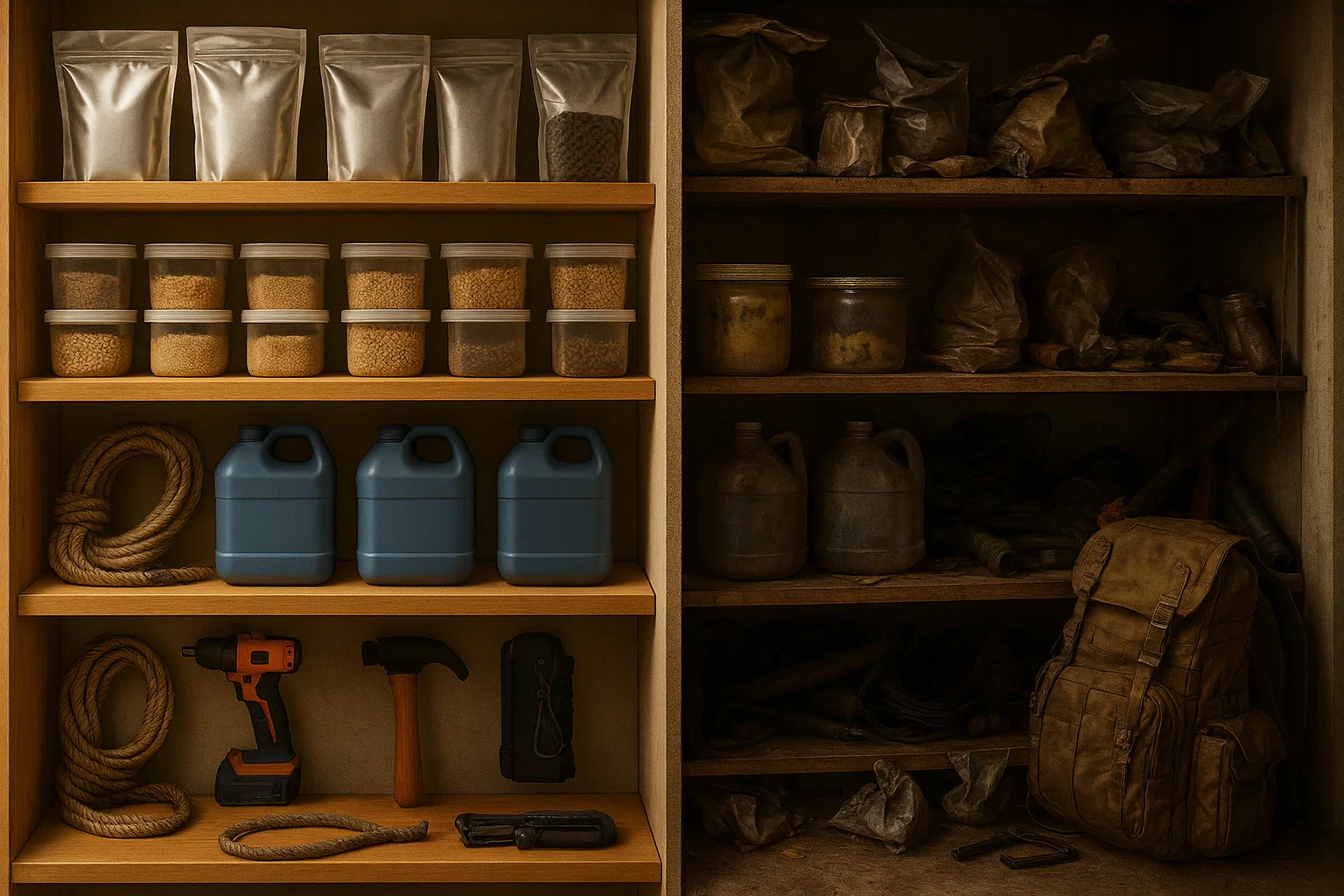
Health risks do not rise slowly when supply chains thin out. They surge in uneven bursts, hitting some people early while everyone else is still assuming there is time. By the time shortages are visible, the damage has already started accumulating inside ordinary routines, missed refills, delayed care, and small problems that no longer stay small. This is how health risks during supply chain shortages actually begin: quietly, selectively, and without warning.
The most dangerous part is not the shortage itself. It is the widespread belief that all medical threats escalate together and can be handled as they appear. That belief causes people to focus on the wrong problems first, while higher-risk failures advance unnoticed. Some medical needs cannot tolerate delay, substitution, or uncertainty, yet they are treated as stable until the moment they are not.

Systems do not fail evenly, and they do not protect everyone at the same rate. When resources thin, prioritization happens automatically, without consultation, and without apology. Those who misunderstand which health threats spike first are not unlucky. They are misinformed, and the consequences arrive long before help does.
Why Health Risks Must Be Ranked, Not Assumed
Scarcity does not ask permission before it starts sorting outcomes. The moment supply chains thin, choices are made about who waits, who receives alternatives, and who is told to come back later. This happens long before anyone admits there is a problem, and long before the public believes ranking is even necessary.
Health systems already rank risk quietly and constantly. They do it through protocols, inventory controls, substitution rules, and triage thresholds that shift as resources tighten. None of this is announced in real time. To the outside observer, services appear open and functional, even as internal standards are lowered and options disappear.
The problem is not that prioritization exists. The problem is that individuals assume they are exempt from it. Most people believe their condition, their medication, or their emergency will automatically qualify as urgent. In reality, urgency is defined by system survival, not personal need.
When people fail to rank health risks for themselves, they inherit the system’s priorities by default. By the time that becomes visible, the ranking has already been applied, options have already narrowed, and the consequences are no longer theoretical.
Rank #1 — Prescription Medication Disruption
Prescription medication does not fail like food or fuel. It depends on uninterrupted continuity, not personal stockpiles, and most people live refill to refill without realizing how thin that margin is. A single missed shipment or delayed authorization is enough to start the clock, even while everything still looks normal on the outside.
The earliest stage of disruption rarely looks like a shortage. It shows up as substitutions, partial fills, changed dosages, or quiet instructions to “check back.” These adjustments are framed as temporary and manageable, but they alter treatment before anyone admits access has narrowed. This is where medication shortages impact health long before shelves look empty.
A delayed insulin refill that stretches a few days past schedule does not trigger alarms, yet control slips immediately while the paperwork catches up. The delay is administrative. The consequences are not.
The body does not respond on the same timeline as the supply chain. Symptoms lag behind interruption, which creates a false sense of safety. Damage accumulates while people assume nothing has changed, and by the time effects surface, continuity has already been broken.
What makes this risk dangerous is how ordinary it feels. There is no emergency announcement, no visible failure, no dramatic cutoff. The exposure happens inside daily routines, inside familiar prescriptions, and inside the assumption that the next refill will arrive because it always has.
Rank #2 — Untreated Infections and Wound Complications
Infection risk rises long before care looks restricted. It increases when supplies thin, when protocols quietly change, and when follow-up becomes uncertain. By the time access is visibly constrained, exposure has already widened and small delays have already altered outcomes.
Antibiotics, antiseptics, and basic diagnostics are among the first pressure points during medical supply shortages. They are rationed, substituted, or reserved under narrower criteria while treatment technically remains available. Care still exists on paper, but access slows just enough to give infections time.
A routine skin infection that waits several days for an antibiotic prescription does not seem urgent while symptoms remain mild. During that delay, bacteria advance while the system sorts availability, approvals, and alternatives. Nothing dramatic happens. The window simply closes.
Visit the store page to grab the best deals!
Diagnostics thin quietly as well. Fewer tests mean more uncertainty, longer waits, and broader guesswork. Infections are addressed later, with less precision, because early confirmation is treated as optional under strain.
When treatment finally arrives, it is often no longer simple. What could have been contained becomes complicated, and what was once minor now competes for resources. This escalation is not accidental. It is the predictable result of care thinning before anyone admits it has.
Rank #3 — Chronic Conditions Without Continuous Management
Chronic conditions do not unravel loudly when systems thin out. They degrade in silence, without pain or urgency, while daily routines continue unchanged. Blood markers drift, control slips, and damage accumulates during healthcare system strain, long before anyone feels “sick enough” to worry.
The danger lives in the gaps. Missed monitoring, postponed labs, delayed adjustments, and stretched follow-ups remove the checkpoints that keep long-term damage in bounds. Each skipped step widens the margin for error while the system quietly reallocates attention elsewhere.
A missed lab check that would normally trigger a medication adjustment does not feel consequential at the time. Weeks pass without new data, treatment stays unchanged, and deterioration continues unnoticed while appointments are rescheduled and capacity catches up.
Stability is assumed because it existed yesterday. Under strain, that assumption becomes a liability. Chronic management slides down the priority list because it is not immediately dramatic, even though its consequences are lasting.
By the time symptoms force action, the advantage of early correction is gone. What was manageable now requires more intervention, more access, and more precision, exactly when all three are harder to secure.
Rank #4 — Loss of Preventive and Early-Stage Care
Preventive care is the first thing quietly pushed aside when capacity tightens. Screenings, routine checks, early follow-ups, and “non-urgent” visits are treated as optional the moment systems come under healthcare system strain. Nothing appears broken. The machinery keeps moving while its early warning functions are shut down.
When detection shifts later, outcomes change. Problems that would have been identified early are discovered only after they have progressed, when intervention is harder, slower, and less reliable. The system is not failing to notice risk. It is choosing when risk becomes visible.
This does not remove danger. It postpones it. The bill arrives later, larger, and with fewer options, at exactly the point when access, time, and attention are already limited.
Rank #5 — Emergency Care Access Failure
Emergency care does not break when doors close. It breaks when priorities change. Under strain, emergency departments shift from treatment to sorting, from response to triage. The promise of immediate care is replaced by decisions about who can wait, who cannot, and who is sent elsewhere.
Access becomes conditional. Timing matters more than need, and severity is measured against available capacity, not personal risk. Two people with the same problem can receive entirely different outcomes depending on when they arrive and what resources remain at that moment. This is how emergency care delays take shape without any public announcement.
What disappears first are guarantees. There is no assurance of speed, no certainty of intervention, and no obligation to resolve the problem during the first encounter. Being seen is not the same as being treated, and being treated does not mean being stabilized.
When emergency care reaches this stage, waiting is not neutral. Every hour spent in uncertainty narrows options while the system protects itself. By the time failure is obvious, it has already been normalized.
Rank #6 — Absence of Basic Medical Supplies at Home
Basic medical supplies thin out before anything officially fails. Over-the-counter medications, rapid tests, bandages, and simple diagnostics disappear quietly during medical supply shortages, not because they are unimportant, but because they are treated as replaceable. Shelves look emptier for weeks before anyone considers it a problem, and by then restocking is already constrained.
When those items are missing, the risk does not vanish. It shifts inward. Households absorb the gap by default, managing pain, illness, and uncertainty with less information and fewer tools. Small decisions are made blind, delays become routine, and minor issues are left to resolve themselves because there is nothing else to do.
What makes this dangerous is how quickly it feels normal. People adjust expectations downward without realizing it. The absence becomes familiar, exposure blends into daily life, and risk increases not through panic, but through quiet acceptance.
What These Rankings Mean for Your Household
These rankings stop being abstract the moment they are applied to a real home. They collapse quickly from systems and policies into missed refills, delayed care, untreated symptoms, and decisions made with incomplete information. This is where health risks during supply chain shortages stop being theoretical and start shaping daily outcomes.
Not every risk tier applies equally, but at least one applies directly. Most households rely on a fragile mix of prescriptions, routine care, early detection, and assumed access to emergency response. When those layers thin unevenly, exposure is not shared. It is personal, and it is determined by what your household depends on most.
The uncomfortable truth is that systems do not adapt to individual households. Households adapt to system limits. When healthcare system strain increases, responsibility does not disappear. It shifts quietly from institutions to individuals, without notice and without negotiation.
Waiting for clarity does not protect you. Rankings are already being enforced behind the scenes, and the system’s priorities are not designed around personal timelines or household stability. By the time risk is obvious, the ranking has already been applied.
At this stage, doing nothing is not neutrality. It is compliance with a system that has already moved on to protecting itself. The pressure does not lift here. It settles closer to home.
Misjudging Priority Is How Health Damage Becomes Permanent
The most common failure is not ignoring risk. It is acting on the wrong one first. Time and attention are spent protecting against visible threats while quieter dangers advance unchecked. During health risks during supply chain shortages, misaligned priorities do more damage than outright neglect.
Delay is not passive. Every postponed decision narrows medical options as access tightens, substitutions increase, and thresholds for care rise. What could have been addressed early becomes harder to treat precisely because the system has already moved on to managing scarcity, not preventing harm.
Inaction does not freeze outcomes. It locks them in. By the time consequences are undeniable, they are no longer reversible, only manageable at higher cost and with fewer choices. This is where damage stops being temporary and becomes permanent.
Health preparedness is no longer about collecting information or waiting for certainty. It is about making hard decisions under constraint, while options still exist. When health risks during supply chain shortages are ranked correctly, exposure can be reduced. When they are not, the system’s priorities replace your own.
The pressure at this stage is not theoretical. Ranking errors do not create inconvenience. They create irreversible exposure by pushing action past the point where timing still matters. What is missed early cannot be recovered later, no matter how urgent it becomes.
Protection does not enter this picture as a lifestyle choice or a precaution. It appears as a response to ranked vulnerability, when reliance on modern systems has already proven conditional. The danger does not pass here. It settles, waiting for the next decision.
The Video Every Prepper’s Talking About: