Crisis preparation usually focuses on what to add. More food, more gear, more supplies stacked in the corners of the house. Almost no one stops to think about what shouldn’t be there when things start breaking down.
That blind spot is dangerous. The wrong items don’t just take up space. They make your home visible when being noticed is the last thing you want. They slow you down when you need to move fast. And they create hazards that don’t exist during normal life but become serious problems once power, water, or emergency services are gone.

Most people don’t realize this until the pressure is already on. By then, there’s no time to reorganize, no calm moment to rethink storage, and no second chance to fix what should have been handled earlier.
Preparation isn’t just about stocking supplies. It’s about removing the things that will work against you when systems fail.
Why “Removal” Matters More Than People Realize
Homes don’t fail during a crisis because of dramatic events. They fail for quiet reasons that build up over time and collapse all at once when pressure hits. Small problems that were easy to ignore during normal life suddenly control how fast you can move, how much attention you draw, and how safely you can operate inside your own home.
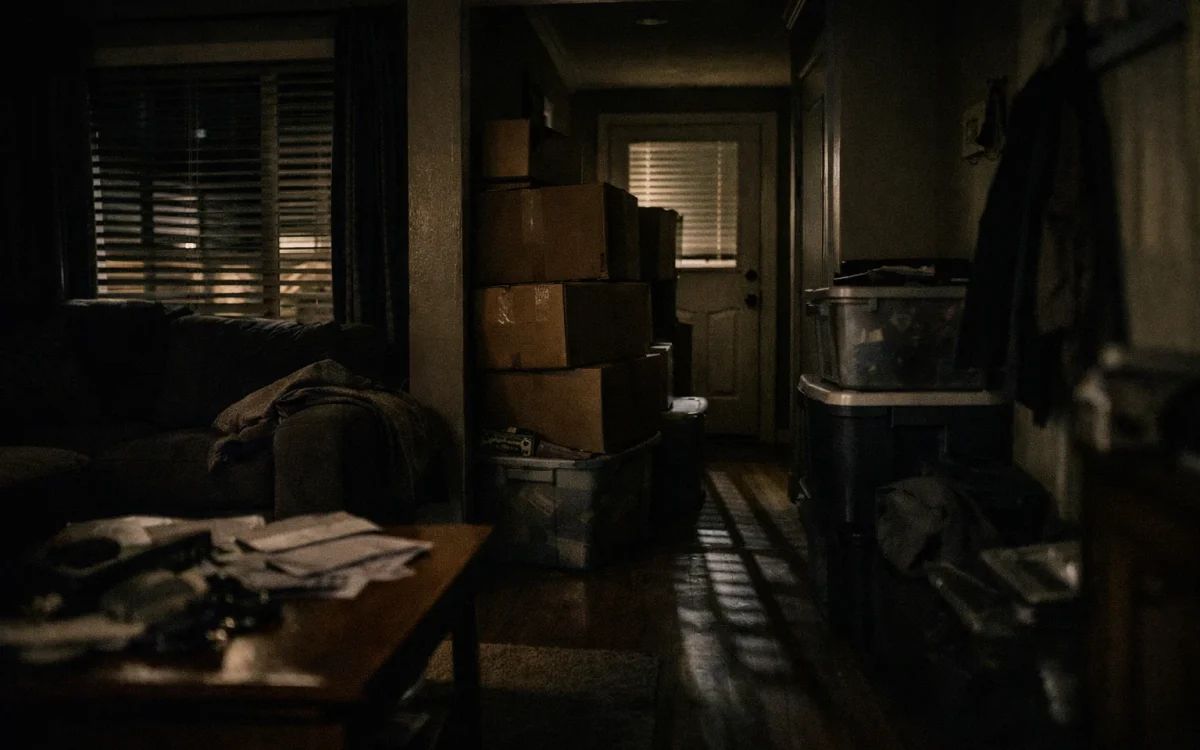
Visibility is one of the biggest risks people underestimate. When supplies, equipment, or unusual storage are easy to spot, they quietly signal that there’s something worth taking. Clutter creates a different problem. It slows movement, blocks access, and forces decisions at the worst possible moment. Friction, extra steps, locked-away essentials, poor layout, wastes time you won’t have when stress is high.
Other Article: 11 Tools That Never Fail When the Lights Go Out.
This is where many people confuse ownership with readiness. Having supplies doesn’t mean you’ll be able to use them when it matters. Food you can’t reach quickly, documents buried under clutter, or exits blocked by stored items don’t help you survive. They turn preparation into dead weight.
Removal is what fixes that. Not throwing everything away, but stripping out what increases exposure, slows response, or creates hazards once systems fail. The sections that follow focus on three areas that decide how a home performs under pressure: visibility, speed, and safety.
Items That Broadcast You’re Prepared
One of the fastest ways a home becomes a problem in a crisis is by advertising preparedness without realizing it. Most people don’t intentionally show what they have. The signals form quietly, over time, through convenience, habit, and storage decisions that feel harmless during normal life.
Neighbors notice patterns. Visitors notice details. Workers notice layouts, boxes, labels, and storage areas while you’re not paying attention. People see what you stop seeing. And once they notice it, you don’t get to take that information back. In a crisis, memory becomes currency. What someone remembers about your house can matter more than what you actually have inside it.
Cut the guesswork. The Self-Sufficient American’s Guide to Outlasting Collapse gives step-by-step checklists for pantry builds, safe water, off-grid power, old-school food preservation, medical basics, and low-profile home security, stuff you can do tonight.
Get your copy now and start your 30-day readiness plan.
Packaging is one of the biggest giveaways. Bulk food boxes, labeled buckets, stacked cases, and branded containers don’t look like preparedness to the person storing them. They look like organization. To someone else, they look like inventory. The same goes for generator boxes, solar gear packaging, fuel containers, and any supplies stored in original, clearly marked containers. These items don’t just say “I planned ahead.” They say “this house is worth checking.”
Storage style matters just as much. Open shelving, garage stockpiles, visible racks, or rooms that look more like supply depots than living spaces create a silent signal. Even if nothing is labeled, repetition tells a story. When supplies are grouped, stacked, and easy to identify, they stand out. In a crisis, standing out is a liability.
Branding creates another layer of exposure. Logos, labels, and recognizable gear don’t disappear just because systems fail. Ammunition boxes, tactical equipment, survival-brand stickers, and even certain container styles are familiar to more people than most realize. You don’t need signs on your lawn for your home to be remembered as “the prepared one.”
This is where many people confuse owning supplies with surviving with them. Owning is private. Displaying is public, even if you didn’t mean it to be. Once preparation becomes visible, it stops being protection and starts becoming attention.
Removal in this context doesn’t mean throwing away supplies. It means removing the signal. Repackaging items into neutral containers. Relocating supplies away from obvious spaces. Concealing storage so it blends into a normal household environment. The goal is to make your home forgettable, not impressive.
This isn’t about paranoia or assuming everyone is watching. It’s about understanding how information spreads when stress rises and people start mentally inventorying their surroundings. The safest prepared homes aren’t the most stocked. They’re the ones that look unremarkable when memory, curiosity, and desperation start overlapping.
Paper, Proof, and Permission
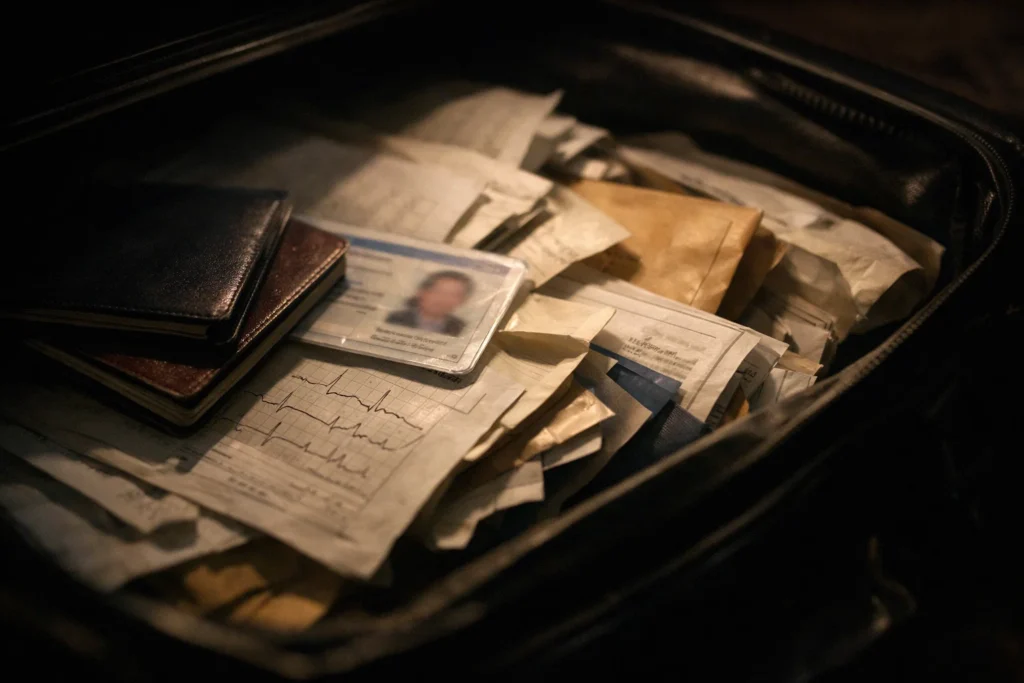
When systems pause, paperwork becomes power. Not comfort. Not convenience. Power. The ability to prove who you are, what you own, where you belong, and what you’re allowed to do suddenly matters more than most physical supplies. People don’t realize this until they’re already stuck explaining themselves to someone who controls access, movement, or aid.
Documents that feel “safe at home” during normal life often become unreachable under stress. Stress changes how you think, how fast you move, and how well you remember where things are. A drawer you’ve opened a hundred times can suddenly feel unfamiliar. A folder you planned to grab becomes buried under panic, clutter, or locked rooms. Accessibility under pressure is not the same thing as security during calm days.
In the first 72 hours of a serious disruption, certain documents matter immediately. Identification, proof of residence, insurance papers, medical information, prescriptions, and anything required to cross checkpoints, access services, or replace essentials rises to the top fast. Without them, you don’t just lose convenience. You lose options.
Visit the store page to grab the best deals!
Originals matter because copies aren’t always accepted. Copies matter because originals can be lost, damaged, or taken. Relying on only one version is a single point of failure. When water, fire, or forced movement enters the picture, paper disappears quickly. Digital backups help, but only if you can access them when power and connectivity are unreliable.
One of the most common mistakes is keeping everything in obvious places. Desk drawers, filing cabinets, bedroom safes, or a single “important papers” folder feel organized, but they concentrate risk. If that one spot is inaccessible, compromised, or forgotten under pressure, everything goes with it.
This is where staging matters more than hiding. Hiding is about secrecy. Staging is about function. Documents should be placed where you can reach them quickly, discreetly, and without thinking, even if your heart rate is high and time is collapsing. The goal isn’t to protect paper at all costs. It’s to protect your ability to act when proof and permission suddenly decide what you’re allowed to do next.
Fire and Chain-Reaction Hazards
Crises don’t just increase risk. They slow response. Fire becomes one of the fastest ways to lose everything because help doesn’t arrive the way it normally does. No quick response. No second engine. No margin for error. What would have been a minor incident on a normal day can turn into total loss when systems are strained or unavailable.
Most fires in emergencies don’t start dramatically. They start with one overlooked item in the wrong place. A fuel container too close to a heat source. Clutter stored where airflow matters. Extension cords, chemicals, or flammable materials sitting where they never caused a problem before. When power flickers, heaters run differently, or people improvise light and heat, small mistakes cascade fast.
Every home has zones of risk, whether people acknowledge them or not. Heat zones near furnaces, water heaters, stoves, and space heaters. Ignition zones where sparks, open flames, or overloaded wiring are present. Clutter zones where stored items trap heat, block ventilation, or hide developing problems. These zones don’t change during a crisis. What changes is how forgiving they are.
This is where the phrase “I’ve always stored it there” stops protecting you. Normal conditions hide bad storage decisions. Crisis conditions expose them. When routines break and stress rises, yesterday’s harmless shortcut becomes today’s ignition point.
Removal doesn’t always mean getting rid of something completely. Sometimes it means relocating it out of a danger zone. Sometimes it means isolating it so a failure can’t spread. And sometimes it does mean removing it entirely because the risk outweighs the benefit. The goal isn’t perfection. It’s preventing one small oversight from triggering a chain reaction you can’t stop once it starts.
Items That Slow You Down When Time Shrinks
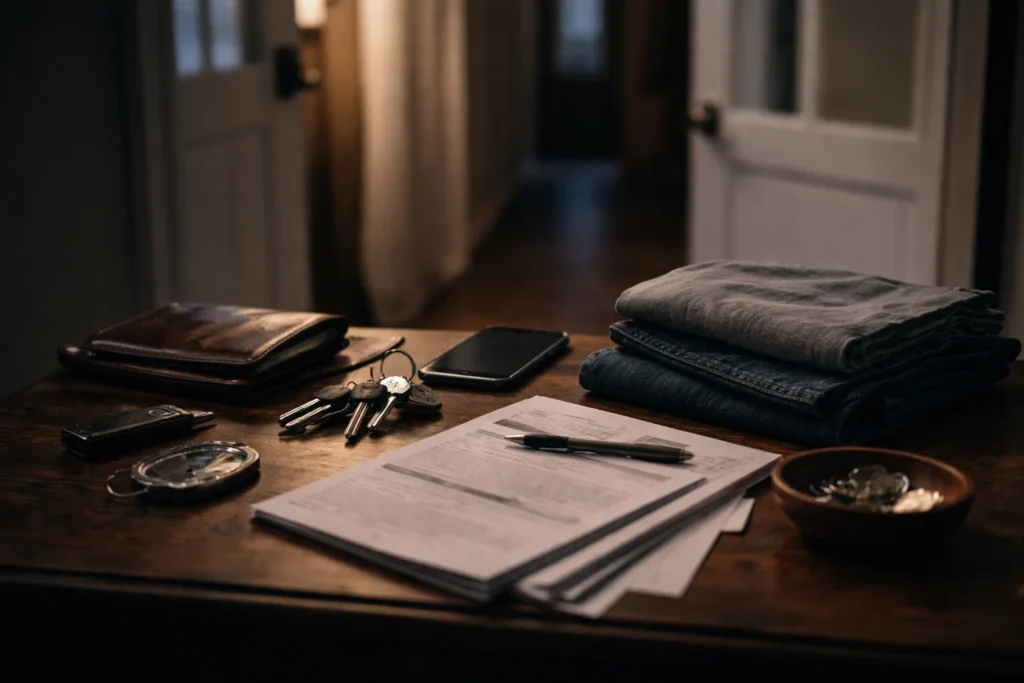
Evacuation isn’t about panic. It’s about friction. The problem isn’t fear. It’s hesitation caused by too many objects competing for your attention when seconds start mattering. The more decisions your home forces you to make, the slower you become.
Sentimental clutter is one of the biggest hidden traps. Items with emotional weight don’t slow you down physically at first. They slow you down mentally. You hesitate. You reconsider. You reach for things you never planned to take. That pause doesn’t feel dangerous in the moment, but it compounds fast when time is collapsing.
Other Article: The Grocery Items That Disappear First in a Blackout
Disorganized valuables create a different kind of delay. When important items aren’t clearly staged, your brain starts scanning instead of acting. You search. You double-check. You second-guess whether you forgot something critical. That mental loop burns time and focus you don’t have.
Removing certain items reduces decision fatigue. Fewer objects mean fewer choices, fewer emotional pulls, and fewer mental branches when stress spikes. This isn’t about minimalism. It’s about control. A home that forces you to decide under pressure is a home that slows you down when speed is the difference between leaving cleanly and leaving late.
Mental load is a real preparedness factor. When stress is high, your brain narrows. Anything that increases confusion, attachment, or uncertainty works against you. The goal is to make movement automatic, not thoughtful, when time shrinks and there’s no room for hesitation.
Medical Dependencies You Don’t Want to Leave Behind
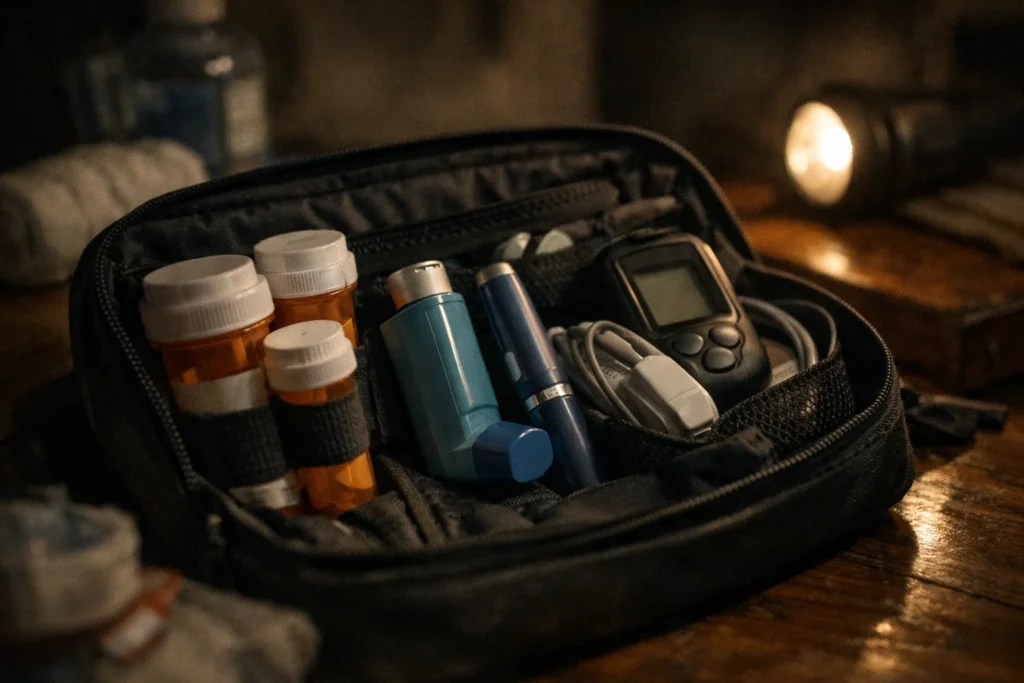
There’s a difference between inconvenience and medical failure, and most people don’t understand it until they experience the second one. Running out of comfort items is annoying. Losing access to medication or a medical device can end your ability to function within hours or days. In a crisis, that line gets crossed faster than people expect.
Medications and medical devices deserve different treatment than general supplies because there’s no substitute when they’re gone. You can improvise light, heat, or food for a short time. You can’t improvise blood pressure meds, insulin, inhalers, or equipment that keeps you breathing or mobile. When systems pause, refills don’t come and replacements don’t show up.
One of the most common mistakes is storing medical essentials where they’re technically secure but practically unreachable. Locked cabinets, buried containers, and hard-to-access storage feel responsible during normal life. Under stress, they become barriers. Fine motor skills drop, thinking narrows, and anything that takes extra steps gets skipped or forgotten.
This is why medical items need to be staged, not hidden. Staging means placing them where you can reach them quickly, discreetly, and without drawing attention. They should be accessible even if power is out, lighting is poor, or you’re not thinking clearly. The goal isn’t to display medical supplies. It’s to make sure they don’t get left behind when leaving them behind becomes a serious problem instead of a minor inconvenience.
Things That Become Sanitation Problems Fast
When the grid goes down, a lot of things that seemed harmless stop being safe. Without running water, trash service, and normal sanitation, small exposures turn into health problems quickly. What you tolerate during normal life can contaminate your living space when systems fail.
Other Article: How to Train With Your Firearm Without Wasting Ammo
Chemicals, fuels, cleaners, and waste don’t need to spill to become a problem. Fumes build up. Containers degrade. Accidental contact becomes harder to clean up. When hygiene standards drop, contamination spreads faster and lingers longer than people expect.
This isn’t about throwing everything away. It’s about separation. Items that don’t belong near food, water, or sleeping areas need to be removed from living spaces and isolated. The goal is to prevent a sanitation issue from becoming a health crisis when cleanup options are limited and mistakes are harder to undo.
What Not to Remove
Overcorrection creates its own risks. In an attempt to eliminate problems, some people go too far and make their homes harder to live in or harder to use when stress hits. Removing the wrong things can create gaps that are just as dangerous as the clutter you were trying to fix.
Some items shouldn’t be removed at all. They should be managed differently. Everyday tools, basic household equipment, and normal-looking storage help a home function and stay unremarkable. A house that looks stripped down or oddly empty raises questions just as much as one that looks overstocked.
Extreme hiding is another mistake. Burying essentials behind multiple locks, false panels, or complicated systems feels secure, but it fails under pressure. When your thinking narrows and time is limited, anything that takes effort to access is at risk of being forgotten or left behind.
Irreversible actions are also dangerous. Destroying useful items, sealing access points, or permanently altering storage without testing how it works under stress removes flexibility. Crises don’t follow a script. You need options, not rigid setups.
The goal is balance. Readiness that still allows normal living. Changes that reduce risk without creating new ones. A prepared home should function quietly, not feel like a bunker you have to relearn how to use when things start breaking.
A Simple Priority Order
- If you have 30 minutes:
Remove anything that draws attention, blocks movement, or keeps you from grabbing documents, meds, and keys fast. Ignore organization. Fix exposure and access first.
- If you have half a day:
Relocate fire and sanitation hazards, stage medical essentials and paperwork, and separate risky items from living spaces. This is where small mistakes turn into big losses if ignored.
- If you have advance warning:
Reduce friction further. Repackage visible supplies, simplify decisions, and test access under pressure. Make the home easier to move through and harder to read from the outside.
- Remember:
Order matters more than perfection. Miss the first priorities, and everything else becomes harder or irrelevant.
Prepared homes don’t announce themselves when things go wrong. They either fail quietly or survive quietly, based on decisions made long before pressure showed up.
Removing the right things is an invisible form of readiness. No one notices it. No one praises it. But it reduces exposure, speeds movement, and prevents small problems from turning into losses you can’t reverse.
Real control doesn’t come from having more. It comes from knowing your home won’t work against you when it matters most.
The Video Every Prepper’s Talking About: