Before getting into the plants, it’s important to be clear about why this list exists. It isn’t about interesting herbs or ideal conditions. It’s about what still matters when access is delayed and replacement isn’t immediate.
Not all medicinal plants are equal in emergencies. Some take too long to mature. Others need careful processing or conditions you won’t have when stress compounds and systems slow down. When nothing else is coming, those plants don’t help.

This list focuses on medicinal plants to grow at home that hold up when modern systems stall, plants you can grow, recognize, and use without hesitation, because they’re already there when shelves are empty.
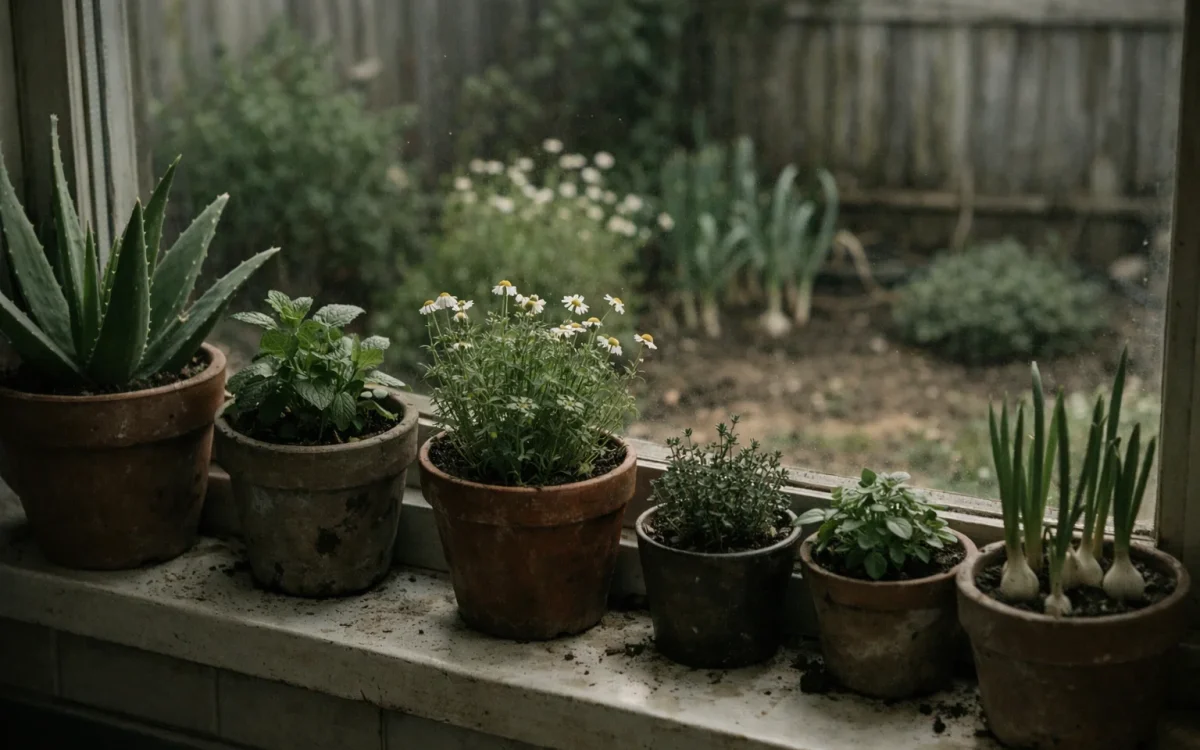
Plants Most Homes Can Grow Indoors or in Containers
This is where preparedness becomes real. These are the plants that don’t wait for perfect conditions, extra land, or motivation later. They live where you already live. And when systems slow down, that matters more than variety or rarity.
Most emergencies don’t start with disasters. They start with headaches, stomach issues, small cuts, poor sleep, things people normally solve by running to the store. When that option disappears, what’s already growing within reach becomes more reliable than anything sealed in a bottle.
Cut the guesswork. The Self-Sufficient American’s Guide to Outlasting Collapse gives step-by-step checklists for pantry builds, safe water, off-grid power, old-school food preservation, medical basics, and low-profile home security, stuff you can do tonight.
Get your copy now and start your 30-day readiness plan.
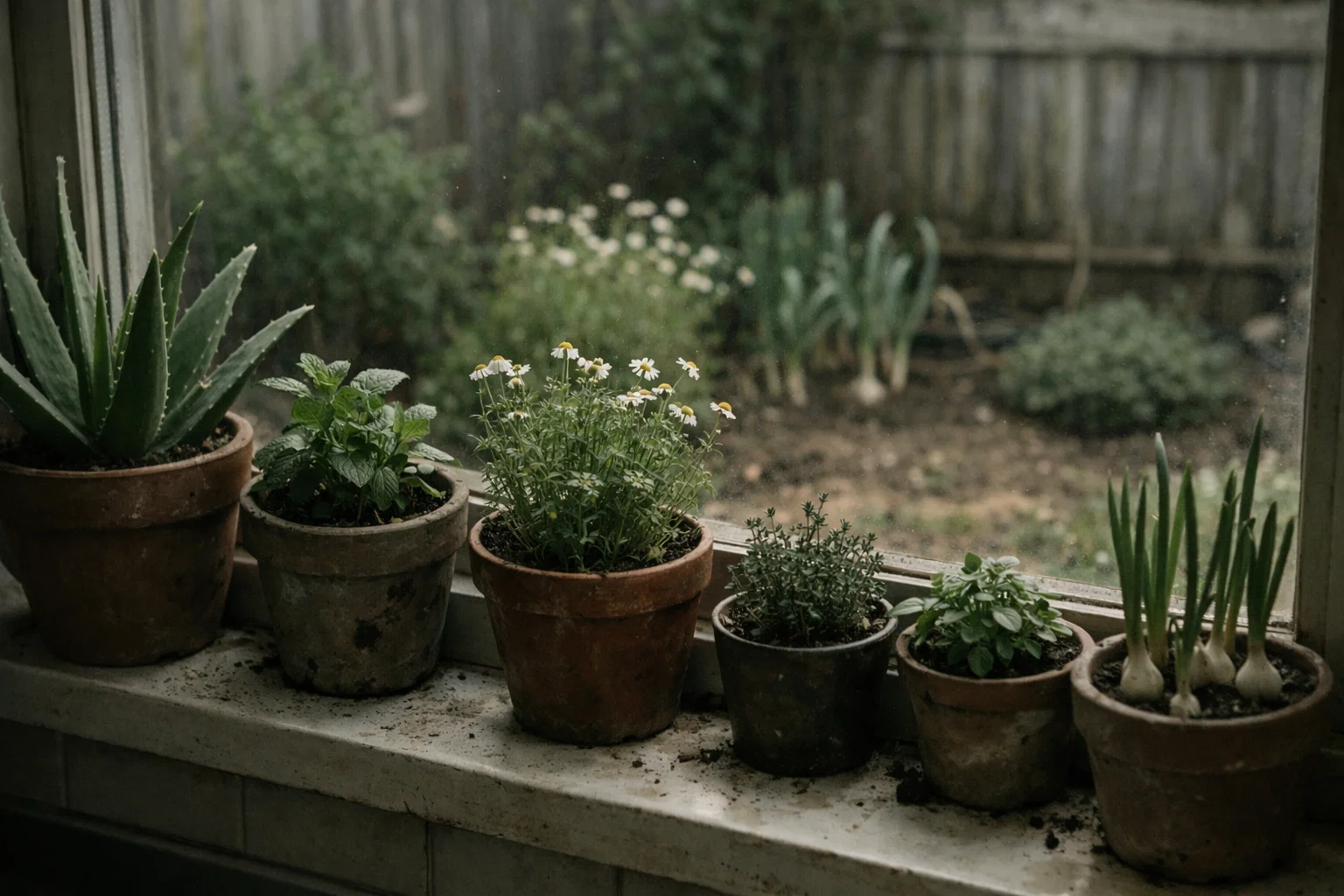
Garlic
Garlic earns its place because it’s always in use. You don’t grow it “just in case.” You grow it because you cook with it constantly. That makes it dependable. When replacement isn’t immediate and supplies thin out quietly, garlic keeps showing up because it never stopped being part of daily life.
A single container is enough. Break a bulb, plant the cloves, and it keeps giving back.
Chamomile
Sleep loss and anxiety wear people down faster than hunger. Chamomile doesn’t fix everything, but it supports the things that quietly fail first: rest, digestion, calm.
It grows well in containers, doesn’t demand attention, and becomes more valuable the longer stress compounds.
Thyme
Thyme looks ordinary. That’s its advantage. It survives inconsistent watering, poor soil, and being forgotten for days. It doesn’t need a learning curve, and people don’t hesitate to use it.
In preparedness, familiarity beats novelty every time.
Oregano
Oregano thrives on being ignored. It prefers rough conditions and keeps producing even when care drops off. Like garlic, it pulls double duty as food and support, which means it earns its space year-round.
Plants that are used daily are the ones still there when convenience disappears.
Aloe Vera
Aloe sits quietly until it’s needed. Cuts, burns, skin irritation, these don’t stop happening when systems slow down. Aloe doesn’t require preparation, timing, or tools. You break a leaf and it’s ready.
That simplicity matters when stress shortens patience and focus.
These plants aren’t impressive. They’re dependable. They don’t rely on schedules, deliveries, or ideal conditions. They stay close, keep growing, and remain available when access disappears.
That’s why medicinal plants to grow at home aren’t about collecting rare species. They’re about keeping support within arm’s reach when nothing else is guaranteed.
Backyard Medicinal Plants That Provide Long-Term Value
This is the point where preparedness stops being convenient and starts becoming uncomfortable, because these plants force you to think long-term. They take space. They don’t deliver instant results. And they don’t care about your timeline.
But once systems slow down, these are the plants people wish they had planted earlier.
Backyard medicinal plants aren’t about quick wins. They’re about what’s still producing when replacement isn’t immediate and nothing new is coming. Once established, they don’t ask permission from supply chains. They don’t depend on refills. They just keep growing.
Echinacea (Purple Coneflower)
Echinacea tests patience. The first year, it barely delivers. That’s why many people skip it.
That’s also why it becomes so valuable later.
Once established, it comes back stronger every season. Roots, flowers, leaves, usable year after year. When access to modern medicine slows and immune stress becomes constant, plants that mature slowly but last long start to matter more than fast solutions that run out.
Yarrow
Yarrow survives where other plants give up. Poor soil, heat, neglect, it doesn’t care.
That toughness is the point. Yarrow doesn’t require perfect timing or careful handling, which makes it dependable when stress compounds and attention is divided. In long situations, plants that tolerate mistakes are worth more than delicate ones that fail under pressure.
Elderberry
Elderberry forces you into a seasonal mindset. You don’t harvest whenever you feel like it. You harvest when it’s ready, then you preserve.
That rhythm changes how you prepare. Instead of reacting, you plan. Instead of relying on constant availability, you build reserves. When systems slow down, that mindset becomes irreplaceable.
Once elderberry is established, it produces heavily and predictably. That reliability is rare when everything else becomes uncertain.
Calendula
Calendula looks harmless. Almost decorative.
That’s why people underestimate it.
It grows fast, reseeds itself, and keeps producing through the season. You don’t have to choose between harvesting and keeping the plant alive, it does both. When small skin issues stack up and supplies are limited, plants that support repeated use without burnout quietly carry a lot of weight.
Comfrey
Comfrey is permanent. Once it’s in the ground, it’s staying.
That permanence is exactly why it belongs in long-term planning. It produces large amounts of usable material, year after year, without asking much in return. When replacement isn’t immediate and stored supplies thin out, plants that regenerate aggressively become assets instead of space-takers.
Comfrey teaches an uncomfortable lesson: where you plant matters, because long-term decisions don’t undo easily.
Seasonal thinking changes preparedness
Backyard medicinal plants force you to accept seasons. Growth stops. Harvest windows close. What you didn’t prepare in time doesn’t magically appear later.
That pressure exposes weak planning fast.
When systems slow down, people who already think in seasons adapt. People who rely on constant availability struggle.
Why these plants become irreplaceable
When supply chains fail quietly, there’s no announcement. Shelves thin out. Refills delay. Options narrow.
Backyard plants don’t react to that. They keep growing on their schedule, not yours. Once they’re established, they reduce how often you need outside support, and that reduction adds up fast.
That’s why medicinal plants to grow at home aren’t just about convenience. They’re about removing dependence one growing season at a time.
Overlooked Plants People Already Have but Don’t Use
Some of the most useful medicinal plants aren’t planted on purpose. They’re already there, in yards, cracks, fence lines, and most people spend time trying to get rid of them. That familiarity is exactly why they’re ignored.
When systems slow down, common plants become valuable for one reason: they didn’t need care to survive in the first place.
Plantain (Plantago)
Plantain shows up everywhere people walk. It survives being stepped on, cut back, and ignored. That kind of resilience isn’t accidental.
When access is delayed and small injuries keep happening, plants that grow under pressure are the ones that stay available. Plantain doesn’t wait for ideal conditions. It’s already there when nothing else is.
Dandelion
Dandelions are treated like a nuisance because they refuse to disappear. Deep roots, fast regrowth, zero maintenance.
That’s exactly the profile you want when replacement isn’t immediate. Plants that fight to exist without help don’t suddenly fail when stress compounds, they keep coming back.
Chickweed
Chickweed doesn’t look important, which is why people overlook it. It grows low, spreads fast, and fills gaps before anything else takes hold.
In preparedness, speed matters. Plants that appear early and don’t need permission from soil quality or care schedules quietly outperform more “impressive” options.
Nettle
Nettle gets avoided because it’s uncomfortable to handle. That discomfort keeps it underused.
But nettle doesn’t depend on attention. Once established, it grows aggressively and returns every year. When nothing else is coming and effort is limited, plants that survive neglect become assets, not inconveniences.
Why these plants matter more than people think
These plants don’t rely on planning, watering schedules, or protection. They survive abuse, weather swings, and human interference.
When systems slow down, the plants that required the least care are often the last ones still available. And having something, anything, within reach is better than realizing too late that you ignored what was already growing.
Plants That Support Specific Household Needs
Most breakdowns don’t start with dramatic injuries. They start with small problems that don’t get handled, because access is delayed and options are limited. A cut that doesn’t get proper care. Digestion that stays off for days. Sleep that never really comes. Pain that keeps wearing you down.
These plants matter because they address those early failures, not as cures, but as support when nothing else is immediately available.
Skin, cuts, and burns
This is where problems show up first and most often. Kitchens, tools, heat, constant movement, small injuries don’t stop just because systems slow down.
Plants like aloe, calendula, and plantain matter here because they work fresh, without preparation or equipment. When stress compounds, the ability to respond immediately instead of waiting becomes critical. Small skin issues handled early are far less likely to spiral into something that drains time and attention later.
Digestive issues
Digestive problems are one of the fastest ways people lose strength and focus. Stress, poor sleep, irregular meals, unfamiliar food, it adds up quickly.
Peppermint and chamomile are valuable not because they’re powerful, but because they’re familiar. When nothing else is coming, people don’t experiment, they use what they already trust. Support for digestion keeps energy levels steadier when pressure is already high.
Respiratory discomfort
Respiratory issues rarely announce themselves as emergencies. They build slowly, irritation, congestion, coughing, and become harder to manage when supplies thin out.
Plants like thyme, oregano, and elderberry matter because they fit into simple routines. Teas, steam, basic preparations. When access to pharmacies isn’t reliable, having medicinal plants to grow at home that support breathing comfort becomes more important than people expect.
Pain, inflammation, and stress
This is where situations quietly fall apart.
Pain reduces mobility. Stress clouds judgment. Sleep loss lowers tolerance for everything else. These don’t stop people outright, they wear them down.
Plants like yarrow, chamomile, and calendula don’t eliminate these problems, but they blunt them. In longer disruptions, even small reductions in pain or stress help preserve decision-making and endurance.
Why support matters more than promises
These plants aren’t about fixing everything. They’re about keeping small problems from turning into big ones when replacement isn’t immediate and systems slow down.
When modern options aren’t available, having some support is far better than having none at all. And that’s what these plants provide, a way to stay functional when convenience disappears.
Plants That Require Caution or Extra Knowledge
“Medicinal” doesn’t mean safe in every situation. It never has.
Some plants are effective precisely because they’re strong, and strength always comes with risk. When systems slow down and stress compounds, misuse becomes more likely, not less. People take more than they should. They combine things without thinking. They keep using something because it’s available, not because it’s appropriate.
Certain plants can interfere with medications, especially anything related to blood pressure, blood thinning, or immune response. Others can trigger allergic reactions, even in people who’ve used them before without issues. And some are fine occasionally but become a problem when used repeatedly over time.
Visit the store page to grab the best deals!
The danger isn’t the plant itself. The danger is assuming that availability equals safety. These plants are meant to support, not to be pushed beyond their role. When something is serious, worsening, or clearly beyond basic care, plants stop being helpful and start being a distraction.
Knowing where to stop is part of preparedness. Misusing what you have can create new problems, and when nothing else is coming, that’s a risk you can’t afford.
Preparedness isn’t about having the biggest stockpile or the most gear. It’s about what keeps working when systems slow down and replacement isn’t immediate. Living plants matter because they don’t run out, don’t depend on deliveries, and don’t disappear quietly when shelves do.
Knowledge is the other half. It doesn’t expire, it doesn’t get recalled, and it doesn’t rely on functioning supply chains. When combined with medicinal plants to grow at home, it becomes a form of support that stays available even as options narrow.
Starting small now matters more than building something perfect later. A few plants you know how to grow and use will always outperform a plan you never acted on. Scrambling only happens when people assume access will always be there.
The real risk isn’t that natural support won’t work.
The risk is realizing too late that when you needed something, you had nothing at all.